
Apple vs. Peach: Calories, Sugar, Fiber & Nutrition Compared
For the same 100 grams, a raw apple with skin has more calories, sugar and fiber than a raw yellow peach. A reference medium apple also has more of each, partly because it weighs more: 182 grams versus 150 grams. The peach has more potassium and vitamin C in both comparisons. So which fruit comes out ahead depends on the nutrient and the portion you mean.
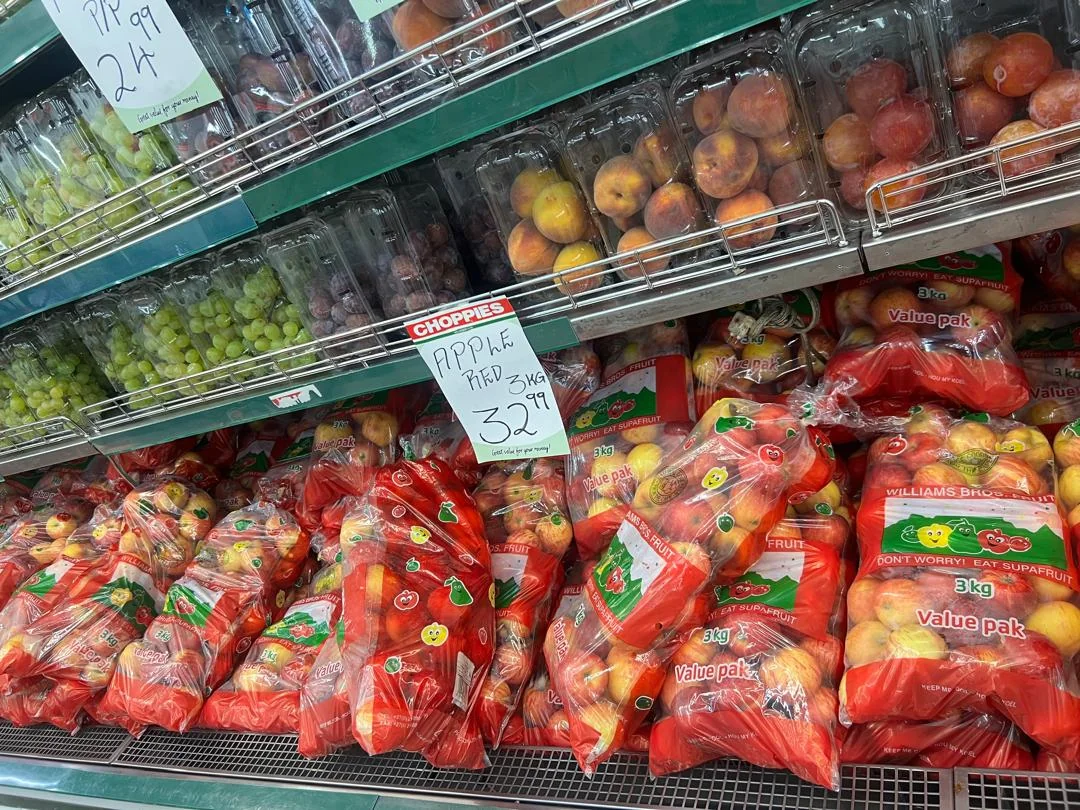
“Apple vs. peach” sounds like one question, but it can mean two different comparisons. Equal weights show how the foods compare gram for gram. A whole-fruit serving shows what you get from one reference-sized fruit. Those answers can feel different because a medium apple in the selected USDA record is 32 grams heavier than a medium yellow peach.
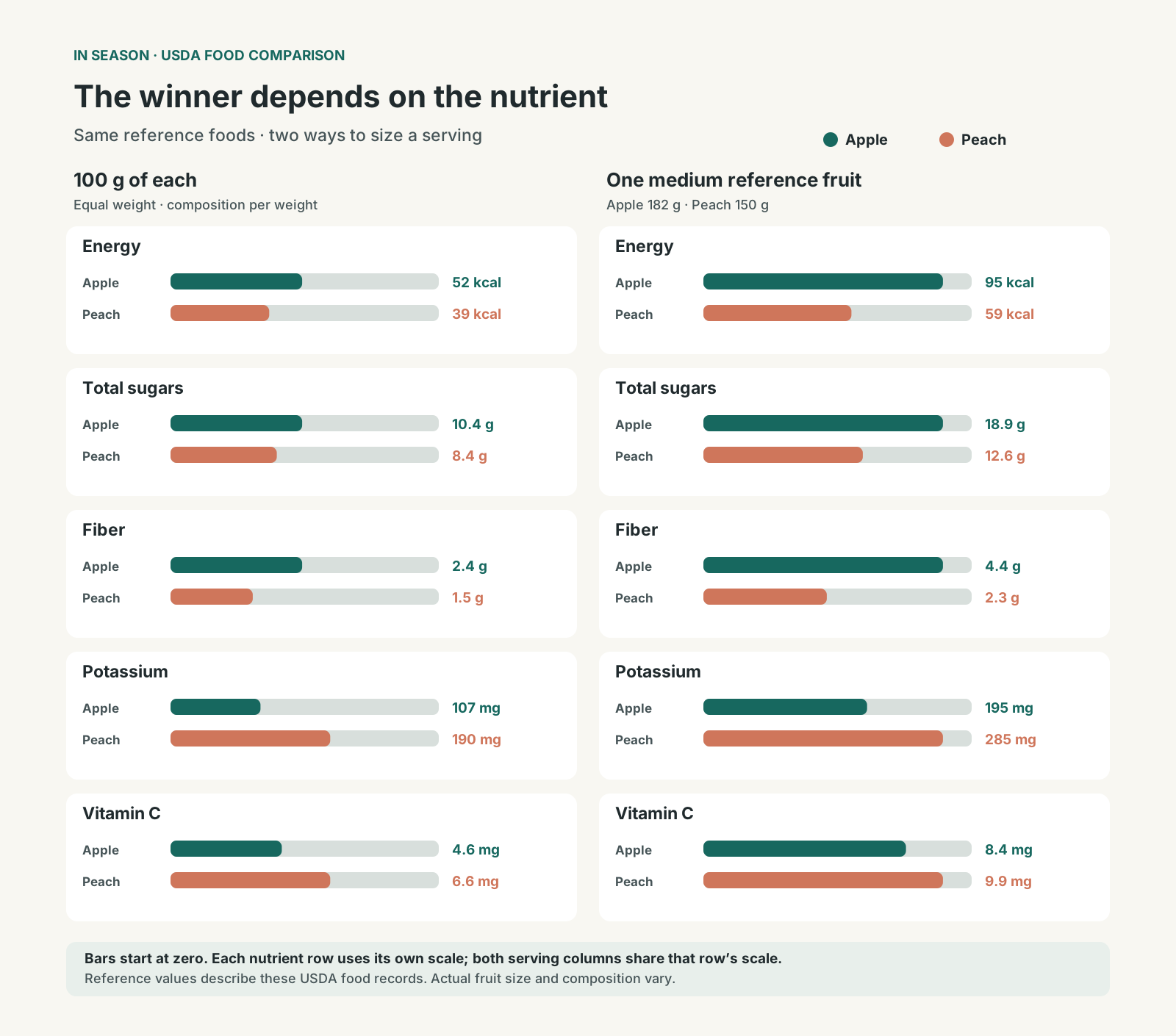
Apple vs. peach nutrition at a glance
The values below use two specific USDA FoodData Central SR Legacy records: raw apple with skin (FDC 171688) and raw yellow peach (FDC 169928). The medium-fruit columns use the records’ reference weights. Numbers are rounded for readability.
| Nutrient | Apple, per 100 g | Yellow peach, per 100 g | Medium apple, 182 g | Medium yellow peach, 150 g |
|---|---|---|---|---|
| Energy | 52 kcal | 39 kcal | 95 kcal | 59 kcal |
| Carbohydrate | 13.81 g | 9.54 g | 25.1 g | 14.3 g |
| Total sugars | 10.39 g | 8.39 g | 18.9 g | 12.6 g |
| Fiber | 2.4 g | 1.5 g | 4.4 g | 2.3 g |
| Potassium | 107 mg | 190 mg | 195 mg | 285 mg |
| Vitamin C | 4.6 mg | 6.6 mg | 8.4 mg | 9.9 mg |
Why equal weight and whole fruit give different answers
At 100 g apiece, the apple record has 52 calories and the yellow-peach record has 39. That is the cleaner comparison if you want to compare the foods at the same weight. But many people pick up a fruit, not a pre-weighed 100 g portion.
For the reference medium fruits, the apple’s 182 g portion works out to about 95 calories; the peach’s 150 g portion works out to about 59. That is a comparison of two reference portions with different weights. A small apple and a large peach can narrow the whole-fruit gap. If portion size matters to your choice, weigh the fruit you plan to eat or use its actual size as a rough guide.
Which has more fiber?
The apple has more fiber in this comparison: 2.4 g per 100 g, against 1.5 g for yellow peach. The reference medium apple comes to about 4.4 g, while the reference peach comes to about 2.3 g. The apple entry is specifically for raw fruit with skin, so peeling it changes what you eat compared with this record.
That makes apple the higher-fiber pick among these two records and portions. It does not tell you exactly how filling either fruit will feel; appetite, the rest of the snack and personal preference all play a part.
Which has less sugar and fewer calories?
Yellow peach is lower in both total sugars and energy here. Per 100 g, the records list 8.39 g of total sugars and 39 calories for peach, versus 10.39 g and 52 calories for apple. The reference whole-fruit estimates are 12.6 g and 59 calories for peach, versus 18.9 g and 95 calories for apple.
These are total-sugar values for whole-fruit reference foods. They let you compare the selected portions; they do not measure added sugar.
Potassium and vitamin C favor the peach record
For potassium and vitamin C, the comparison goes the other way. Per 100 g, the yellow-peach record lists 190 mg of potassium and 6.6 mg of vitamin C; the apple record lists 107 mg and 4.6 mg. The reference medium peach also comes out higher for both: about 285 mg of potassium and 9.9 mg of vitamin C, compared with about 195 mg and 8.4 mg for the apple.
So, should you pick an apple or a peach?
Use the comparison that matches your question. Looking at equal weights? In these USDA records, peach is lower in calories and total sugars, while apple has more fiber. Choosing one medium fruit? The apple reference weighs more, so it has larger totals for calories, sugar and fiber; the peach remains higher for potassium and vitamin C.
Then let taste, texture, ripeness and what is in season make the everyday decision. An apple may suit you when you want a crisp fruit; a ripe peach may suit you when you want something soft and juicy. You can enjoy either fruit, or both.
To choose a ripe peach, read how to tell when a peach is ripe. You can also explore the Redberi Produce Directory for seasonal guidance and fruit-selection tips, or get Redberi on iOS and Android.
Sources and serving-size notes
Nutrition values come from USDA FoodData Central SR Legacy records for apples, raw, with skin (FDC 171688) and peaches, yellow, raw (FDC 169928), checked through the public USDA API. SR Legacy is USDA’s final Standard Reference release; see the FoodData Central dataset downloads. Whole-fruit values are calculated by scaling the per-100 g values to the reference portions (182 g and 150 g). Download the chart calculation data (CSV) and selected USDA reference records (JSON). The medium-fruit estimates round calories and potassium to whole units and other values to one decimal; half units round up, so 58.5 calories appears as 59. Actual fruit size and variety affect the totals in a portion, and composition varies. These entries do not represent every apple or peach variety, peeled fruit, or cooked and canned fruit.