
Can You Store Onions and Potatoes Together?
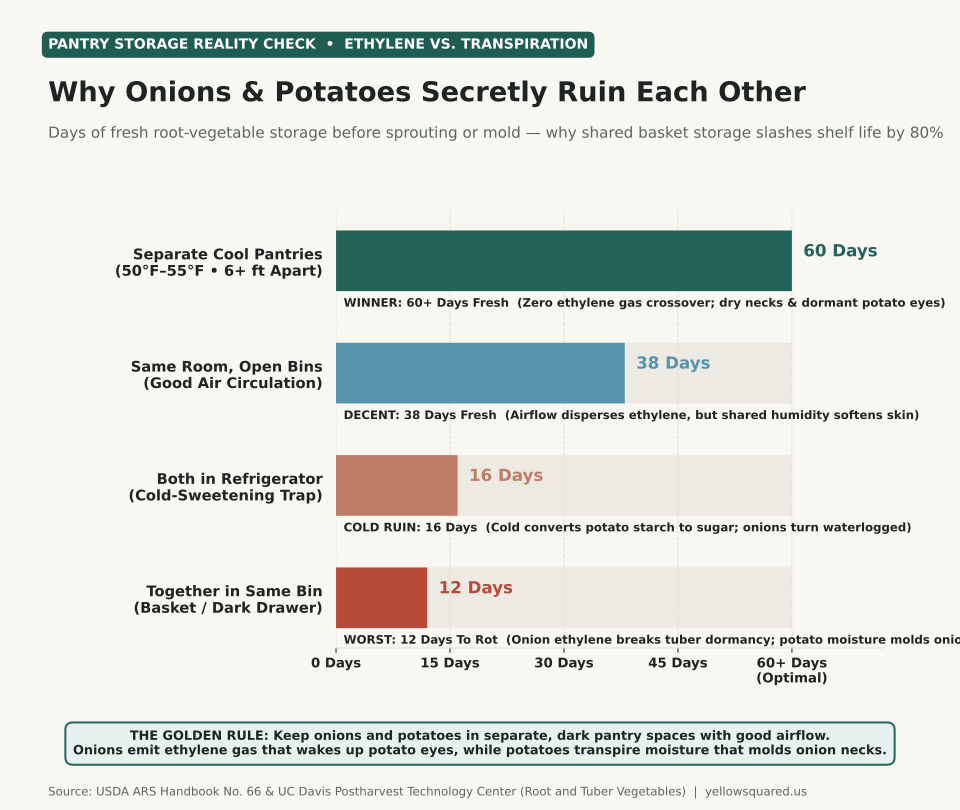
Never store onions and potatoes together in the same pantry bin, drawer, or wire basket: onions emit trace ethylene gas that breaks potato tuber dormancy and triggers rapid sprouting, while potatoes transpire high humidity that causes dry onion papery scales and necks to rot. Separating them into two distinct cool, dark pantry spaces (at 50°F to 55°F with good air circulation) extends the fresh shelf life of both staples from under 12 days to more than 60 days.
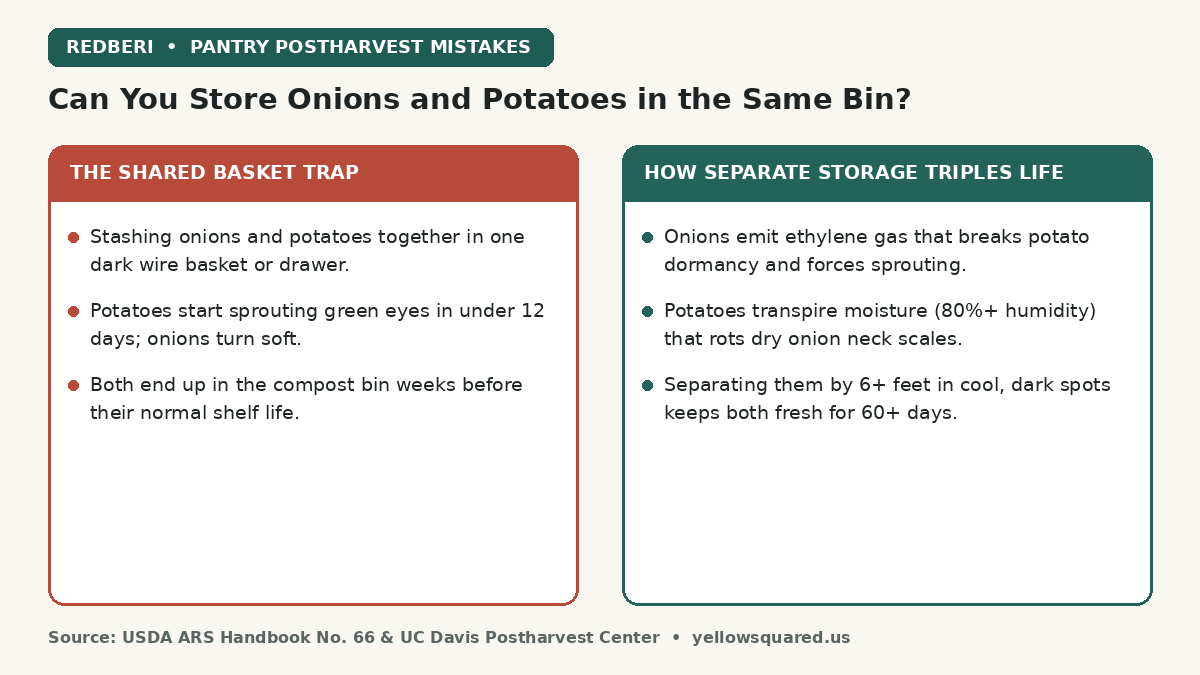
Every home cook has seen tiered kitchen wire baskets or decorative double-decker wooden bins sold specifically to hold onions on one level and potatoes on the other. It feels like natural kitchen logic: both are earthy staple roots bought in bulk by the five-pound sack that belong in a cool, dark corner. Yet storing them together is the single most common reason potatoes grow long purple-and-green eyes within two weeks while yellow onions turn soft and leaky at the root base.
Onions and potatoes are biological opposites in storage: onions require dry air to stay dormant, while potatoes require high humidity to prevent shriveling.
The Two Clashing Chemical Weapons: Ethylene Gas and Transpiration
According to postharvest plant physiologists at the UC Davis Postharvest Technology Center, the cross-contamination between onions and potatoes unfolds along two distinct physiological pathways:
- Onion ethylene triggers potato eye meristems: Cured dry onions produce moderate amounts of ethylene gas (C2H4), the natural ripening hormone. While ethylene is low in dormant bulbs, even trace concentrations (>0.1 ppm) break the natural endodormancy of potato tuber buds ("eyes"), signaling the tuber to convert starches into sugars and send out rapid green sprouts.
- Potato transpiration rots dry onion scales: Russet and Yukon Gold potatoes consist of 80 percent water by weight and continuously transpire water vapor through their porous skin (lenticels). In a closed drawer or basket, this creates a microclimate with relative humidity exceeding 85 to 90 percent. Dry cured onions require a low relative humidity of 65 to 70 percent; excess moisture softens the outer tunic and allows fungal pathogens like Botrytis allii (neck rot) to liquefy the bulb core.
- The Solanine Hazard: As potato eyes sprout in the presence of ethylene and warmth, the tuber produces toxic glycoalkaloids — the exact chemical pathway we examine when evaluating which produce items produce ethylene gas in storage.
Why You Should Never Put Either in the Refrigerator
If pantry bins fail, many cooks default to the crisper drawer of their refrigerator (35°F to 40°F). However, cold storage introduces two severe biochemical penalties:
- Cold-induced sweetening in potatoes: When stored below 45°F (7°C), potato invertase enzymes break down complex starches into simple reducing sugars (glucose and fructose). When fried or roasted at high heat (>250°F), these reducing sugars react with free asparagine in a rapid Maillard reaction to produce bitter dark-brown patches and elevated levels of acrylamide.
- Chilling softening in dry onions: In a humid refrigerator, onions absorb moisture like a sponge, losing their crisp, pungent cellular turgor and turning into waterlogged, mushy bulbs within two to three weeks.
Optimal Storage Protocol for Onions and Potatoes
| Vegetable | Ideal Storage Temp | Ideal Relative Humidity | Best Container & Placement |
|---|---|---|---|
| Dry Onions & Garlic | 50°F to 60°F (Cool) | 65% to 70% (Dry) | Open hanging wire mesh bag or slatted wooden crate in a dry, ventilated pantry cabinet. |
| Potatoes & Sweet Potatoes | 45°F to 55°F (Cool) | 85% to 90% (Moderate) | Perforated cardboard box or breathable dark paper bag in the coolest, lowest closet corner. |
To inspect varietal ripening timelines, ethylene sensitivity tables, and seasonal produce profiles, explore the interactive Redberi produce quality guide.