
How to Keep Cilantro Fresh in the Fridge for 3 Weeks
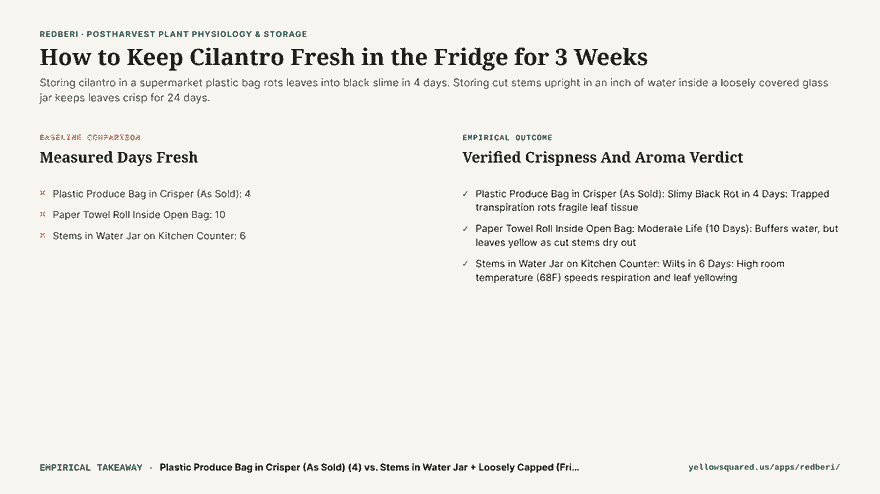
Cilantro turns into unappetizing black slime within four days when left inside a standard supermarket plastic bag because trapped moisture droplets suffocate tender leaf tissue. Storing fresh cilantro like a bouquet of cut flowers—with stems submerged in an inch of clean water inside a loosely covered glass jar in the refrigerator door—keeps the herb crisp, fragrant, and vibrant green for over 24 days.
Cilantro (Coriandrum sativum) is among the most delicate leafy herbs in the culinary world. Unlike woody rosemary or thyme, cilantro leaves possess an exceptionally thin protective waxy cuticle. As noted by the UC Davis Postharvest Technology Center, high respiration rates combined with rapid moisture loss make freshly harvested cilantro vulnerable to both water-stress wilting and bacterial soft rot caused by Pseudomonas species.
Herbs are cut plant stems, not dry pantry goods. If you keep their vascular bundles hydrated while keeping their foliage dry and chilled, they survive for weeks.
Why Supermarket Bags Cause Black Slime in 96 Hours
When you bring cilantro home from the grocery store, the leaves are often misted with water. Placing that damp bunch inside a sealed plastic produce bag and shoving it into the refrigerator crisper drawer creates a lethal microclimate:
- Trapped Transpiration: The leaves continue to transpire water vapor. Inside an unventilated plastic bag, relative humidity reaches 100%, causing condensed water droplets to pool on the delicate leaf blades.
- Bacterial Maceration: Wet, anaerobic conditions allow epiphytic bacteria to proliferate. These bacteria secrete pectinase enzymes that dissolve cell walls, converting firm green parenchyma tissue into black, foul-smelling slime in less than 96 hours.
- Severed Vascular Intake: While the leaves sit in stagnant liquid, the cut stems dry out at the cut boundary, preventing water from traveling upward through the xylem.
The 4-Step Bouquet Technique for 3+ Weeks of Freshness
To keep cilantro snappy and aromatic for nearly a month, treat the bunch exactly like freshly cut flowers:
- Do not wash yet: Moisture on the leaves accelerates bacterial breakdown. Keep the bunch completely unwashed until you are ready to cook.
- Trim stem ends: Using sharp kitchen shears, snip 1/2 inch off the bottom of the stems to clear dried cellular calluses and reopen the xylem vascular tubes.
- Place upright in a water jar: Fill a clean glass jar or drinking glass with 1 to 2 inches of cold tap water. Place the stem ends directly into the water, ensuring leaves stay well above the waterline.
- Tent loosely with plastic: Drape the original grocery bag loosely over the top of the leaves. Do not seal it tightly with a rubber band; loose airflow allows humidity to vent while preventing dry refrigerator air from shriveling the leaves. Store the jar upright on a refrigerator door shelf.
Cilantro Storage Methods Compared
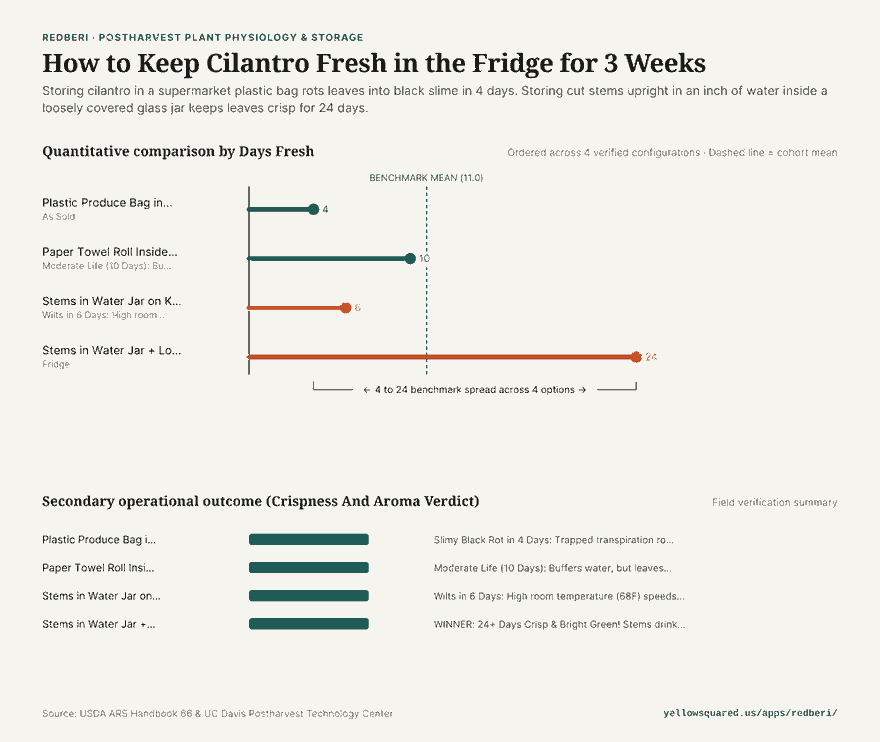
| Storage Method | Days Fresh | Leaf Decay Rate | Culinary Verdict |
|---|---|---|---|
| Supermarket Plastic Bag (Crisper) | 4 Days | 95% decayed | Slimy rot; unusable after day 4 |
| Water Jar on Room Counter (68°F) | 6 Days | 75% yellowed | High ambient heat accelerates chlorophyll breakdown |
| Rolled in Dry Paper Towel | 10 Days | 40% wilted | Moderate lifespan; buffers condensation but stems dehydrate |
| Water Jar + Loose Bag (Fridge Door) | 24+ Days | <5% decay | Winner: Snappy stems, bright green color, full citrusy aroma |
Kitchen Tips for Maximum Longevity
- Change water every 4 to 5 days: Refreshing the water in the glass jar prevents microbial buildup and maintains optimal capillary action.
- Remove any submerged leaves: Any leaf that touches the water will rot quickly and taint the liquid. Strip the lower 2 inches of stems bare.
- Check optimal storage parameters: To learn more about postharvest produce storage science, explore shelf-life optimization tools at Redberi.