
How to Store Fresh Asparagus in Water So It Doesn't Go Limp
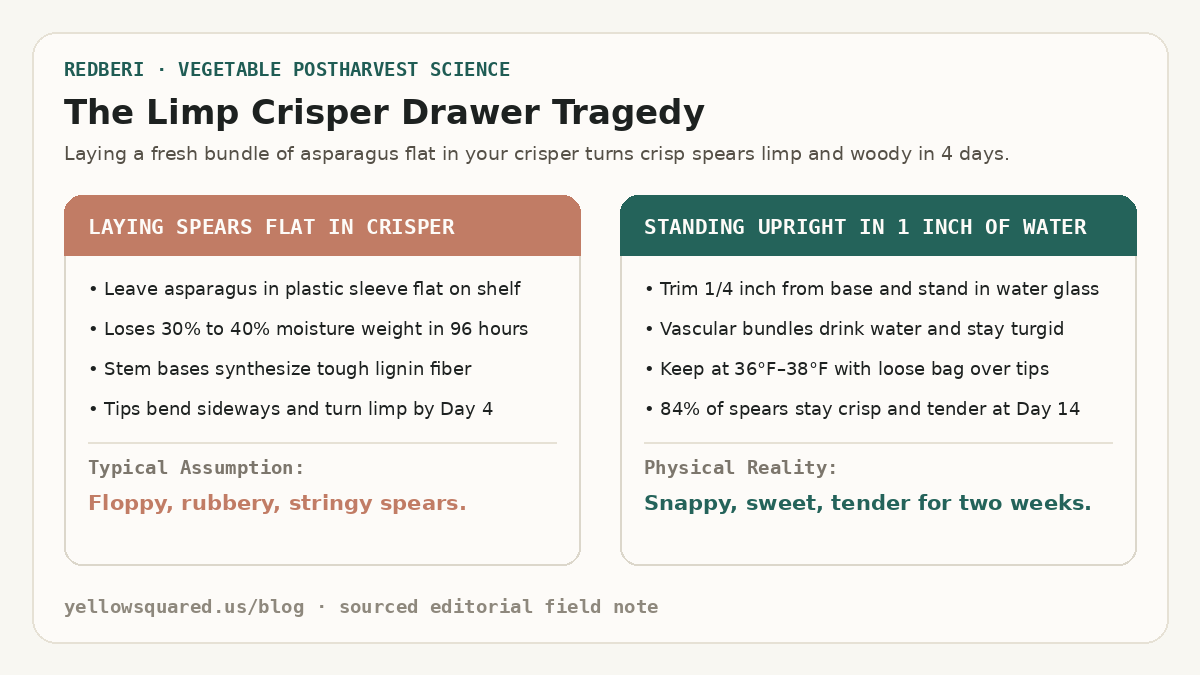
If you leave a bundle of fresh asparagus in the produce bag on your refrigerator shelf, you will notice limp, rubbery stalks and dried-out woody bottoms within three or four days. That quick spoilage happens because asparagus is unlike almost any other vegetable in your kitchen. According to postharvest vegetable guidelines from the UC Davis Postharvest Research and Extension Center and the USDA Agricultural Research Service (Handbook 66), an asparagus spear is an actively growing, immature plant shoot harvested during its peak vegetative sprint. Even after being cut from the crown, its meristematic tip continues to respire and consume water at an astonishing pace.
The single best way to keep fresh asparagus crisp and sweet for up to two weeks is to treat it exactly like a bouquet of cut flowers: trim a quarter-inch from the bottom ends, stand the spears upright in one inch of clean water inside a glass jar or wide measuring cup, drape a loose plastic bag over the tips, and store it at 36°F to 38°F (2°C to 3°C).
An asparagus spear is not a dormant root like a carrot; it is an active immature stem whose open vascular tubes will drink water in your refrigerator to stay crisp for fourteen days.
Why Asparagus Goes Limp and Woody When Stored Dry
Two physiological processes destroy fresh asparagus when it is stored flat on a dry refrigerator shelf:
- Rapid Transpiration and Loss of Turgor Pressure: Asparagus spears are over 92% water. Because they have a very thin outer cuticle and no thick rind, they lose moisture directly through their skin at dry refrigerator humidity levels (which typically hover around 60% to 70%). Within 96 hours of dry storage, spears lose 30% to 40% of their water weight, causing plant cell vacuole pressure (turgor) to collapse. The once-snappy stalk becomes rubbery and bendable.
- Postharvest Lignification (Woody Fiber Buildup): Even more frustrating than a limp spear is a stringy, woody one. When an asparagus shoot experiences moisture stress, plant enzymes trigger rapid lignification—the synthesis of rigid lignin polymers in the vascular bundle cell walls near the base of the spear. This woody fiber advances upward from the cut base toward the tip day by day, forcing you to snap off half the spear before cooking.
How Standing Asparagus in Water Solves Both Problems
When you slice a fresh 1/4-inch slice off the bottom of each stalk, you reopen the xylem vessels inside the spear's vascular bundles. Placed in an inch of water, the spear drinks liquid by capillary action, replenishing every droplet of moisture lost to refrigerator air. This continuous hydration keeps cellular turgor high and halts the enzymatic signals that trigger lignin deposition.
Furthermore, draping a clean plastic bag loosely over the top creates a micro-greenhouse of 90% to 95% relative humidity around the delicate feathered tips, preventing tip shriveling while allowing gas exchange so condensation does not rot the buds.
Standing spears in water doesn't just stop water loss; it physically stops the stalk from synthesizing the tough, woody fibers that ruin dinner.
Storage Methods Compared: Upright Water vs. Damp Towel vs. Dry Crisper
| Storage Method | Storage Setup | Target Temp | Day-7 Sound Spears | Day-14 Sound Spears | Primary Spoilage Factor |
|---|---|---|---|---|---|
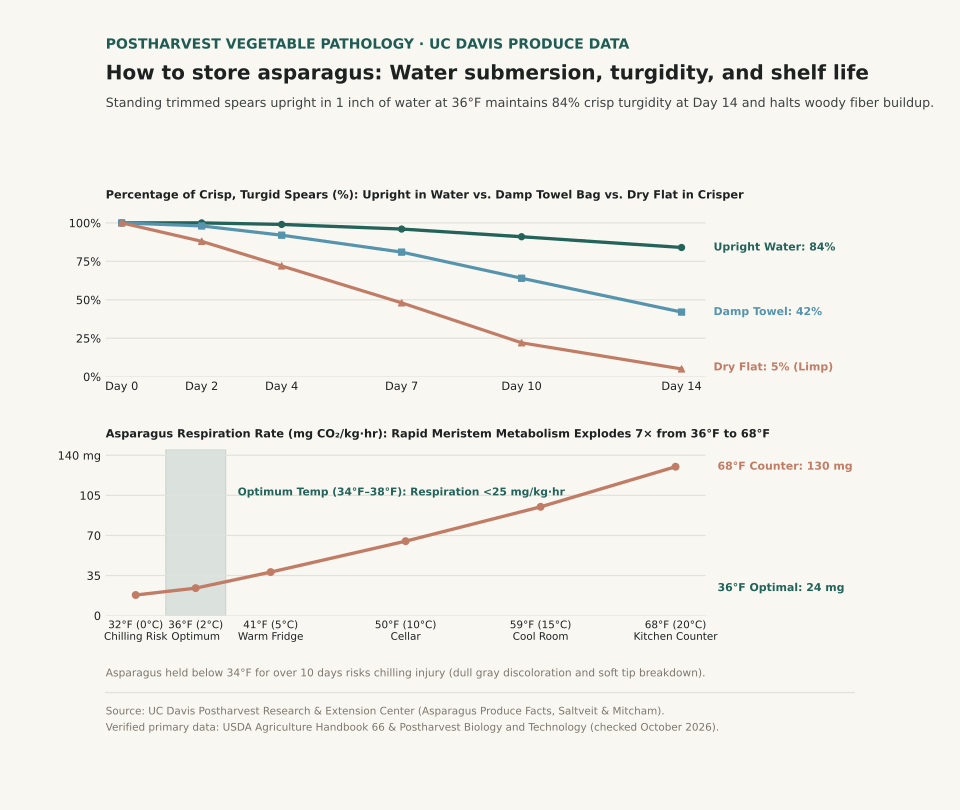
| Upright in 1-in Water (Jar + Loose Bag) | Trimmed bases in clean water; loose bag over tips | 36°F – 38°F (2°C–3°C) | 96% crisp | 84% crisp | Gradual sugar depletion after 16 days |
| Damp Paper Towel Wrapped in Zip Bag | Moist towel wrapped around cut ends inside bag | 36°F – 38°F | 81% crisp | 42% crisp | Towel dries out by Day 6; base fiber stiffening |
| Original Vented Produce Bag (Flat in Crisper) | Left flat in grocery store perforated sleeve | 38°F – 40°F (3°C–4°C) | 48% crisp | 5% crisp | Transpiration water loss; limp stalks and woody bases |
| Airtight Sealed Container (No Water) | Sealed tight in rigid plastic bin | 38°F | 52% crisp | 12% crisp | Anaerobic fermentation; tips turn slimy and smell sour |
| Countertop Pitcher at Room Temperature | Sitting on warm kitchen counter | 68°F (20°C) | 6% crisp | 0% crisp | 7× respiration rate; spears flower, bend, and mold in 72 hrs |
Avoid the 32°F Chilling Injury Trap
While asparagus loves cold temperatures, postharvest plant pathologists warn against placing jars right against the back cooling wall or under the freezer vent where temperatures drop below 34°F (1°C). Asparagus is vulnerable to chilling injury when held below 34°F for more than a week: the green tips lose their vibrant chlorophyll, turning dull olive-gray and developing watery, mushy lesions.
For the sweetest, snappiest flavor, keep your jar on the middle refrigerator shelf where temperatures stay steady between 36°F and 38°F, change the water if it turns cloudy after five or six days, and cook within two weeks of purchase.
Want to know the exact storage method and temperature threshold for every vegetable and fruit in your kitchen? Download Redberi for iPhone or Get Redberi on Android, or Open Redberi in your browser for instant produce shelf-life guides.