
How to Store Fresh Herbs So They Don't Turn Slimy in the Fridge
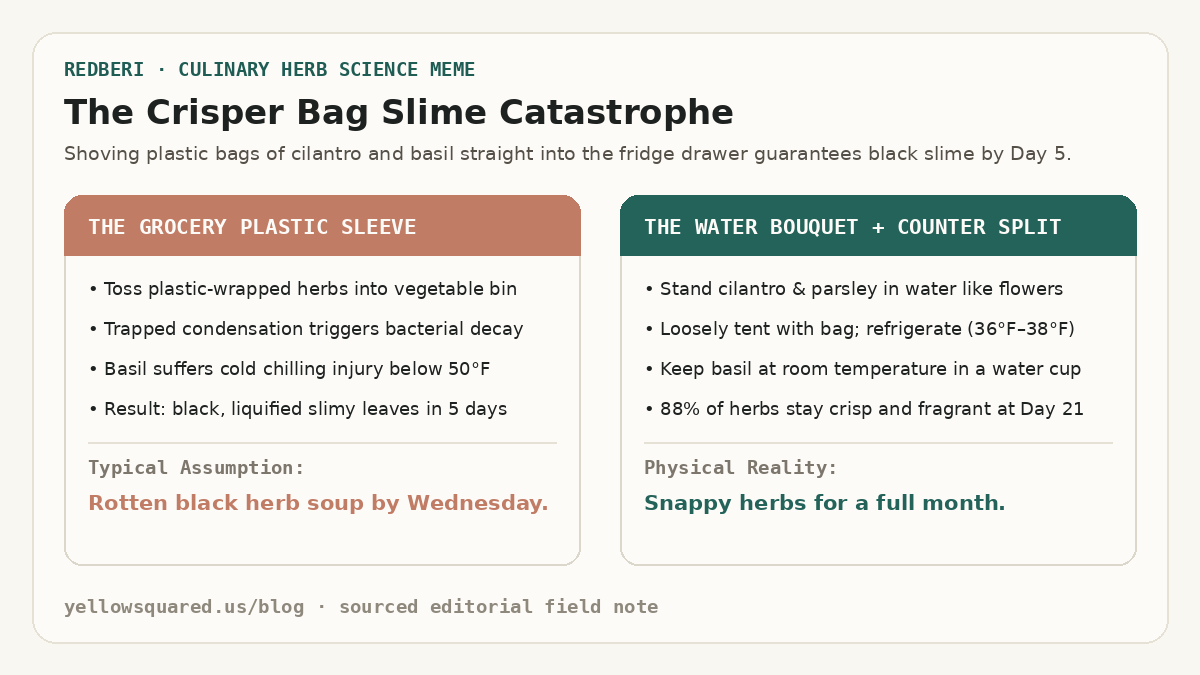
There is nothing more frustrating than buying a vibrant bunch of fresh cilantro or basil for dinner, only to open the crisper drawer four days later and find a bag of black, liquified slime. That common kitchen disaster happens because most home cooks treat all herbs identically—shoving them straight into the refrigerator inside their grocery produce plastic sleeve. According to postharvest herb guidelines from the UC Davis Postharvest Research and Extension Center and the USDA Agricultural Research Service (Handbook 66), fresh culinary herbs belong to two completely different plant categories that require opposite storage environments.
Tender stem herbs like cilantro, parsley, and mint thrive in cold water bouquets inside the fridge (36°F–38°F), whereas tropical herbs like basil suffer devastating chilling injury below 50°F and must be kept on the kitchen counter at room temperature.
Putting fresh basil in the refrigerator doesn't preserve it—it freezes the tropical cell membranes, turning vibrant green leaves into black mush within forty-eight hours.
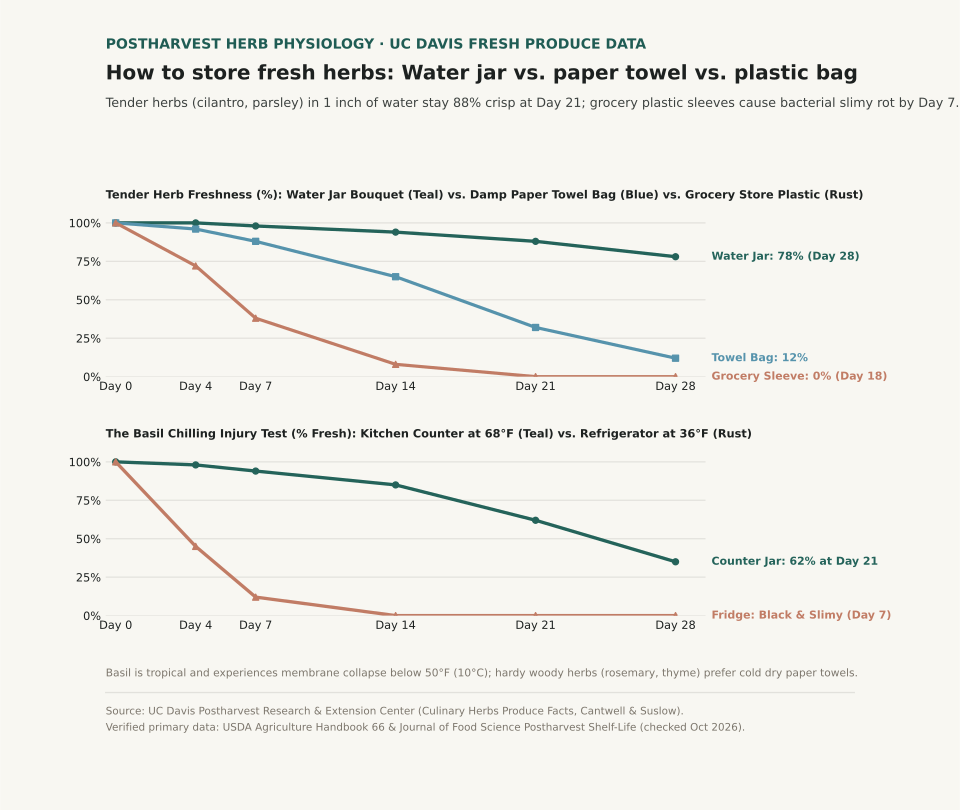
Tender Herbs (Cilantro, Parsley, Mint): The Water Bouquet Method
Tender herbs have soft, fleshy green stems and delicate leaf cuticles with high surface-area-to-volume ratios. When harvested, their open vascular bundles lose moisture rapidly to dry refrigerator air (transpiration). If sealed in a plastic produce bag, trapped humidity condensation droplets pool on the leaves, triggering rapid bacterial soft rot (Pseudomonas and Erwinia species).
To keep cilantro, flat-leaf parsley, curly parsley, and mint crisp for 3 to 4 weeks, use the water bouquet setup:
- Snip the stems: Trim 1/2 inch off the bottom of the stem bundle with sharp kitchen shears to reopen xylem tubes.
- Remove low leaves: Pluck off any leaves near the bottom so no foliage sits submerged beneath the water line (submerged leaves rot and foul the water).
- Place in a glass jar: Stand the herb bundle upright in 1 inch of clean water inside a mason jar or drinking glass.
- Cover loosely with a plastic bag: Drape the original grocery plastic bag or a clean produce bag loosely over the top of the herbs, creating a high-humidity greenhouse (90%–95% RH) without trapping condensation against the leaves.
- Refrigerate at 36°F to 38°F: Place the jar on a middle refrigerator shelf and change the water every 5 to 7 days.
The Basil Exception: Why Basil Must Never Go in the Fridge
The single biggest mistake home cooks make with fresh herbs is putting basil in the refrigerator. Sweet basil (Ocimum basilicum) is a tropical plant native to equatorial regions of central Africa and Southeast Asia. Plant physiologists at UC Davis have documented that basil experiences acute chilling injury whenever temperatures drop below 50°F (10°C).
Inside a standard 36°F refrigerator, cold temperatures cause basil leaf cell membranes to lose fluidity and rupture. Phenolic compounds inside the cells oxidize into brown and black melanin pigments, while water leaks into extracellular spaces, causing leaves to become water-soaked, limp, and blackened within 48 to 72 hours. To keep basil fresh for two to three weeks:
- Trim the stems and place the bundle in a jar with an inch of water.
- Keep the jar on your kitchen counter away from direct sunlight at comfortable room temperature (65°F to 72°F / 18°C to 22°C).
- Never refrigerate fresh cut basil.
Treat basil like fresh-cut flowers on your counter, never like salad greens in your fridge.
Hardy Woody Herbs (Rosemary, Thyme, Oregano, Sage)
Hardy herbs have fibrous, woody stems and thick, waxy leaf cuticles designed to resist dry Mediterranean winds. They do not lose water nearly as fast as cilantro, and standing them in water can cause their woody bases to turn moldy.
To store rosemary, thyme, sage, oregano, and chives for up to a month:
- Do not wash the herbs until right before cooking.
- Roll the dry herb sprigs loosely in a dry or barely damp paper towel.
- Place the wrapped bundle inside a sealed zip-top bag or airtight glass container in your refrigerator crisper drawer. The paper towel absorbs excess moisture while keeping ambient humidity steady.
| Herb Category | Herbs Included | Storage Setup | Target Temperature | Expected Shelf Life |
|---|---|---|---|---|
| Tender (Soft Stems) | Cilantro, Parsley, Mint, Dill | Upright in 1 inch of water + loose bag tent | 36°F – 38°F (Refrigerator) | 21 to 28 days (Crisp & green) |
| Tropical Exception | Sweet Basil, Thai Basil | Upright in water on counter; NO cover | 65°F – 72°F (Room Temp Only) | 14 to 21 days (Avoids blackening) |
| Hardy (Woody Stems) | Rosemary, Thyme, Sage, Oregano | Rolled in dry paper towel in sealed container | 34°F – 38°F (Refrigerator) | 28 to 35 days |
| Tender Allium | Chives, Scallions | Wrapped in paper towel in zip bag | 34°F – 38°F (Refrigerator) | 14 to 18 days |
Want to check the exact storage guidelines, chilling sensitivities, and ripeness indicators for every fruit, vegetable, and herb in your kitchen? Download Redberi for iPhone or Get Redberi on Android, or Open Redberi in your browser for instant produce shelf-life guides.