Do Apple Lenticels Mean an Apple Is Sweet? What to Check Instead
Those tiny dots on an apple are usually lenticels: natural openings in the skin. They can be useful for recognizing a variety, but they do not reliably tell you how sweet an individual apple will taste. For a better grocery-store decision, start with the variety, firm unbroken skin, the fruit's aroma where relevant, and a few fruit-specific maturity signs.
What lenticels can—and cannot—tell you
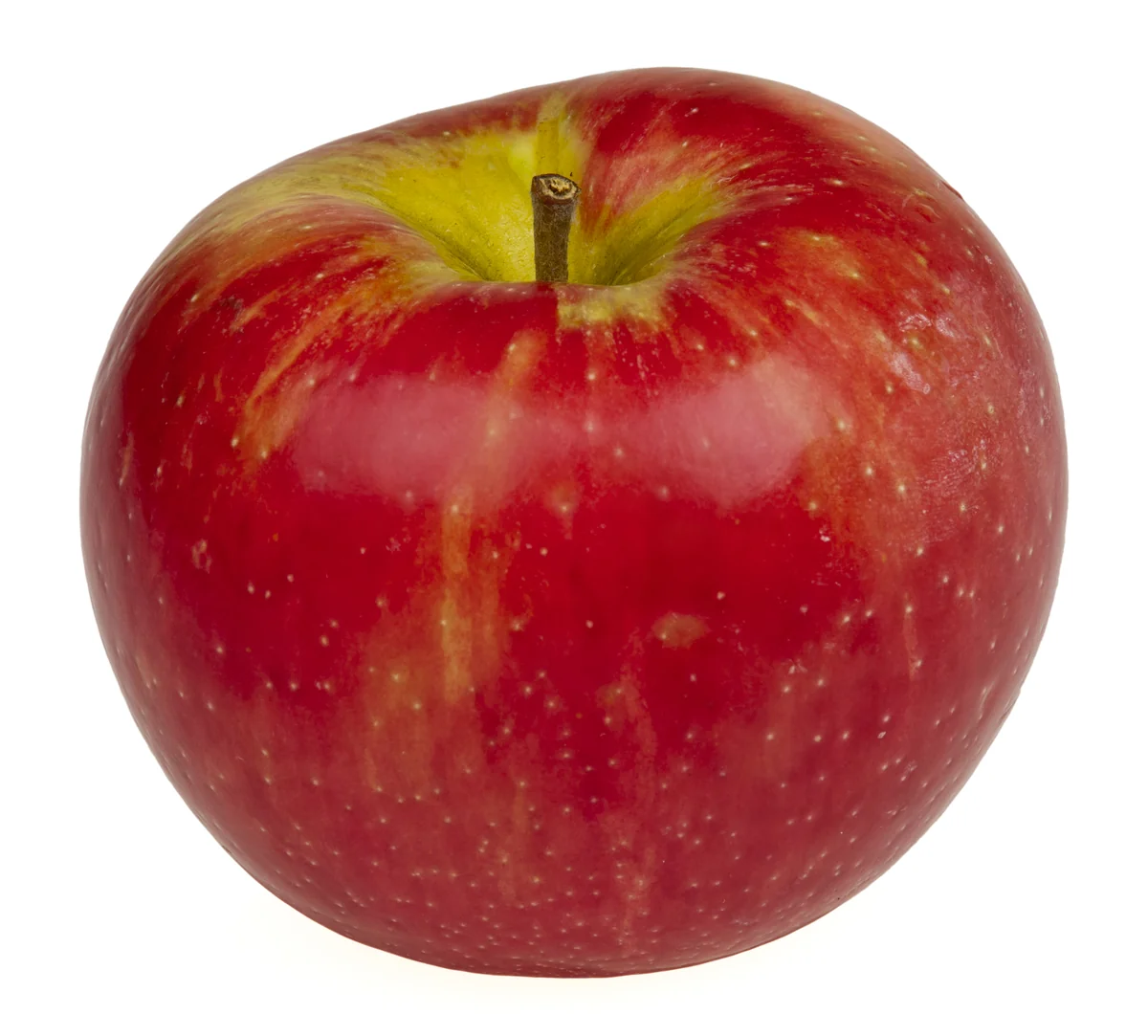
Lenticels allow gas exchange through the skin. Their appearance varies by cultivar, growing conditions and handling. University of Maryland Extension describes lenticels as lens-shaped openings and notes that changes around them can also be a storage disorder. That makes them a poor shortcut for ranking sweetness in a produce bin.
| Fruit | Useful signs to check | Do not treat this as a sweetness guarantee |
|---|---|---|
| Apples | Choose the variety you enjoy; look for firm skin without bruises or shrivelling. | More or darker lenticels. |
| Peaches | Warm cream or yellow background colour, fragrance and slight give for fruit to eat soon. | Red blush alone. |
| Cantaloupe | Sweet aroma, raised netting and a clean stem scar. | Netting by itself, or a melon that merely feels heavy. |
| Watermelon | A creamy yellow field spot, sound rind and a shape typical for the variety. | Thumping, webbing or field spot colour alone. |
Two dotted apples can taste different
A tart apple and a sweet-tasting apple can both have visible lenticels. The surface openings tell you something about the skin; they do not reveal the balance of sugar and acid inside. Start with a variety whose flavour you enjoy, then use condition to choose among its fruit.
A practical way to choose an apple
First, pick the variety for the job. A tart Granny Smith, fragrant Gala and crisp Honeycrisp are different on purpose; no surface pattern makes them interchangeable. Then reject apples with soft bruises, wrinkled skin or punctures. Firmness is a useful freshness check, although it cannot reveal every internal defect.
At home, keep apples cold. Apples are climacteric fruit: they continue to produce ethylene after harvest, which is useful for ripening some nearby fruit and unhelpful for delicate produce you want to keep longer.
Use the right clue for each fruit
Peaches
Read the background colour rather than the red blush. A peach with a green cast may soften on the counter, but the quality ceiling was set before harvest. For a fruit you want today, choose one that smells fragrant and gives gently when supported in your palm. Our peach ripeness guide has the full checklist.
Cantaloupe
Cantaloupe can soften and become more aromatic after harvest, but its sugar does not keep accumulating once it is off the vine. Look for a warm background beneath the netting, a sweet smell at the stem end and no wet or fermented spots. See the cantaloupe guide for the signs in order.
Watermelon
Watermelon does not ripen significantly after harvest, so selection matters more than counter time. A yellow or cream field spot and a mature-looking, undamaged rind are useful cues, but none can promise the inside. The best test is buying in season from a seller with good turnover. The watermelon guide explains the cues and their limits.
What actually measures sweetness?
Growers can estimate soluble solids with a refractometer, usually reported as degrees Brix. In fruit juice, that reading includes sugars and other dissolved substances; it is not a direct score for how pleasant a fruit will taste. Acidity, aroma and texture also affect the experience. You cannot get that reading from lenticels, webbing or a single tap on the rind. Visual signs are screening tools: use several together, and accept that fruit biology leaves room for variation.
Sources and method
- University of Maryland Extension: lenticels and lenticel breakdown in apples.
- USDA Agricultural Marketing Service: ethylene handling technical report.
- University of Minnesota Extension: harvesting and storing melons.
- University of Maryland Extension: ripening behaviors and harvest indexes for melons.