
What Is a Freeze Watch vs. Warning? Temperature & Lead Time Rules
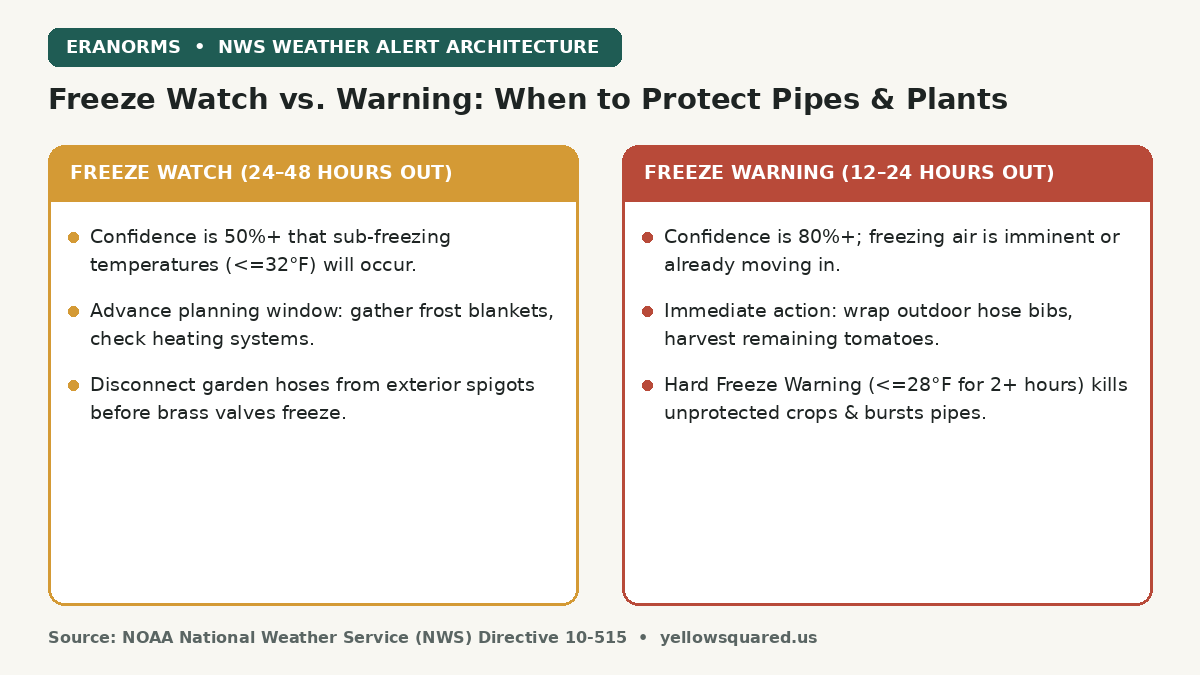
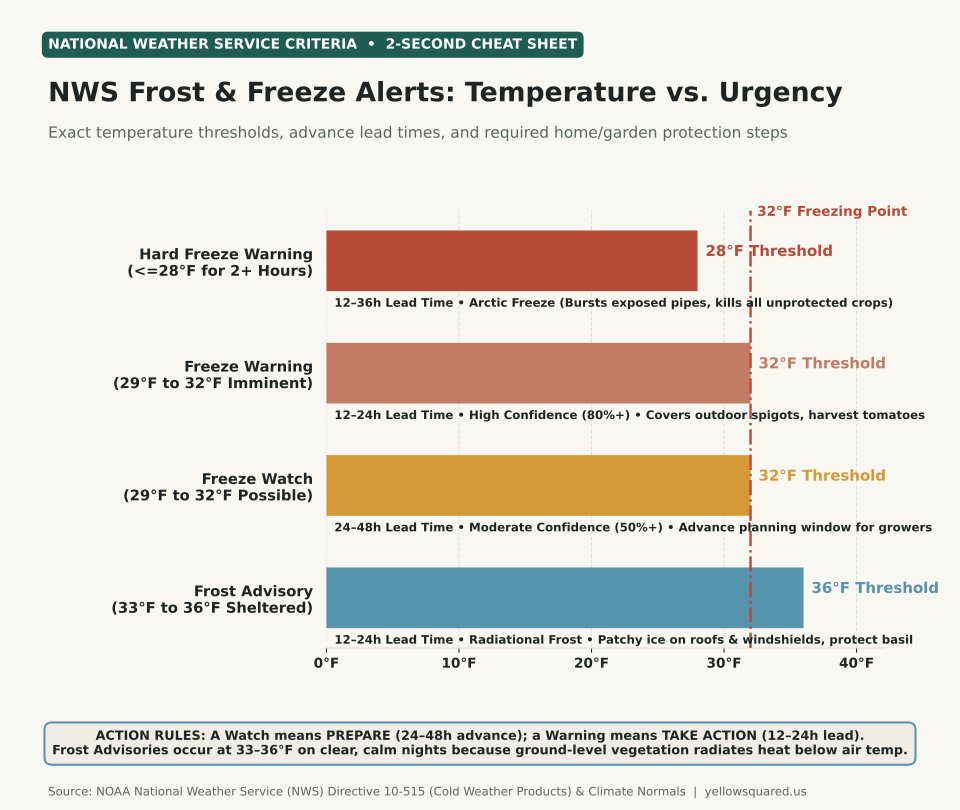
The difference between a Freeze Watch and a Freeze Warning comes down to confidence and lead time: the National Weather Service (NWS) issues a Freeze Watch 24 to 48 hours in advance when there is at least a 50 percent chance of sub-freezing temperatures (29°F to 32°F), whereas a Freeze Warning is issued 12 to 24 hours out when freezing conditions are imminent or occurring with 80 percent or greater confidence. A Frost Advisory, by contrast, applies when sheltered air temperatures drop between 33°F and 36°F on clear, calm nights because ground-level vegetation radiates heat directly into space and falls below 32°F.
Every autumn and early spring, gardeners, homeowners, and growers watch local forecasts anxiously as overnight lows flirt with the freezing mark. Yet confusion between watches, warnings, and advisories frequently leads to lost garden harvests or burst exterior plumbing. Knowing the exact temperature thresholds and atmospheric conditions defined by the National Weather Service ensures you take the right protective measures at the right time.
A Freeze Watch is your notification to gather frost blankets and plan; a Freeze Warning is the order to disconnect hoses, wrap spigots, and harvest tender produce.
How Can Frost Form at 36°F? The Physics of Radiational Cooling
One of the most common weather questions is why an NWS office issues a Frost Advisory when the forecast low is 35°F or 36°F. Official thermometer sensors are housed inside standardized radiation shields at 5 to 6 feet above ground level (the standard 2-meter meteorological measurement height).
On clear, calm autumn nights with wind speeds under 5 mph, ground-level surfaces (grass, soil, pumpkin patches, and car windshields) radiate thermal infrared energy directly out into the cloudless night sky. In the absence of wind mixing, a shallow temperature inversion forms near the surface. The grass blades and plant leaves can cool 4°F to 7°F colder than the air 5 feet above — dropping vegetative tissue to 30°F while the official thermometer reads 36°F. Water vapor condenses and freezes directly into delicate ice crystals (hoarfrost), killing tender annuals like basil, tomatoes, and dahlias.
The 4 Official NWS Cold Alert Categories
According to NWS Directive 10-515 (Cold Weather Products), cold alerts are only issued during the locally defined growing season (between the median last spring freeze and the first autumn freeze):
| Alert Product | Temperature Threshold | Confidence & Lead Time | Required Protection Action |
|---|---|---|---|
| Frost Advisory | 33°F to 36°F (Ground ≤ 32°F) | 80%+ confidence (12–24h lead) | Cover tender potted flowers, basil, and late garden beds with breathable cloth; move pots indoors. |
| Freeze Watch | 29°F to 32°F (Widespread) | 50%+ confidence (24–48h lead) | Prepare: Locate spigot covers, inspect greenhouse heaters, and plan crop harvest. |
| Freeze Warning | 29°F to 32°F (Imminent) | 80%+ confidence (12–24h lead) | Take Action: Disconnect garden hoses, shut off irrigation backflow valves, harvest all ripe tomatoes. |
| Hard Freeze Warning | ≤ 28°F for ≥ 2 hours | 80%+ confidence (12–36h lead) | Emergency: Guaranteed mortality of all garden vegetation; insulate exposed pipes to prevent bursts. |
Why a Hard Freeze (28°F) Is Geometrically More Destructive
Water expands by 9 percent as it transitions from liquid to ice. When temperatures hover between 29°F and 32°F for an hour or two, only thin exterior cell walls or outer leaves freeze, while soil warmth and latent heat keep root systems and sheltered stems viable. Once ambient temperatures stay at or below 28°F for two consecutive hours, cold penetrates deep into plant crowns, perennial roots, and brass plumbing fixtures. Water inside uninsulated outdoor pipes freezes solid, generating hydrostatic pressures exceeding 2,000 pounds per square inch and rupturing copper or PVC joints.
To inspect 30-year autumn frost dates and daily minimum temperature probabilities across U.S. reporting stations, explore the Eranorms climate explorer.