
What Is the Chase 5/24 Rule? How It Actually Works
The Chase 5/24 rule is an unwritten underwriting policy stating that Chase will automatically deny any new credit card application if you have opened five or more personal credit cards across ANY bank within the preceding 24 months. Because excellent credit scores, high incomes, and six-figure bank deposits cannot override this algorithmic threshold, understanding how to sequence personal and business card applications is the foundation of travel rewards strategy.
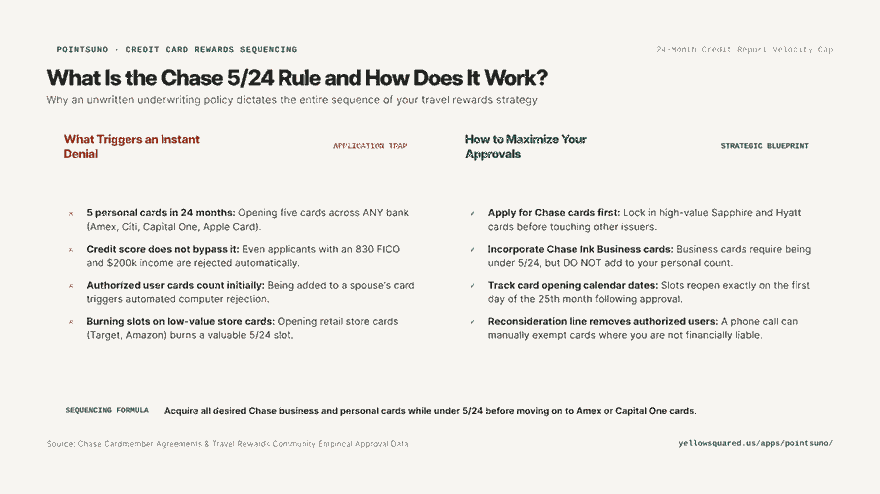
First uncovered by award travel communities in early 2015, the 5/24 rule represents Chase’s primary defense against credit card “churning”—the practice of opening cards solely to collect lucrative sign-up bonuses before closing them. While other major credit card issuers enforce specific restrictions (such as American Express’s lifetime bonus rule or Citi’s 48-month cooldowns), Chase’s policy looks across your entire personal credit report at all financial institutions.
Your credit score measures whether you pay your bills; Chase 5/24 measures how fast you acquire revolving credit.
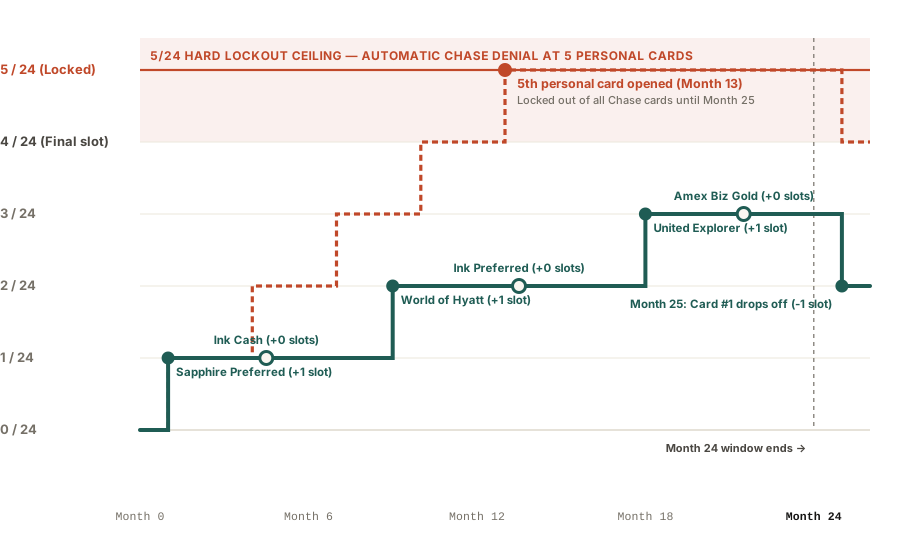
Which Cards Count Toward Your 5/24 Tally?
To calculate your current 5/24 standing, review your credit reports on Experian, Equifax, and TransUnion:
- All Personal Cards Count: Any revolving personal credit card opened with American Express, Capital One, Citi, Discover, Apple Card, or retail department stores (like Target or Nordstrom) adds one slot to your 5/24 status.
- Authorized User Cards: If your spouse or parent adds you as an authorized user to their personal card, that card appears on your credit report. Chase’s automated computer algorithm will flag it as an open account and deny you initially. However, calling the Chase reconsideration line allows a human analyst to manually remove authorized user cards from your tally.
- Business Cards Do NOT Add to 5/24: Most small business cards (including Chase Ink Business, American Express Business, and CitiBusiness cards) report strictly to commercial credit bureaus, not your personal consumer credit report. They do not consume a 5/24 slot.
The Crucial Nuance: Chase Business Cards Require <5/24 to Be Approved
While Chase Ink Business cards (such as the Ink Business Preferred, Ink Cash, and Ink Unlimited) do not add to your personal 5/24 score, you must be under 5/24 to be approved for them. If you are currently at 5/24 or 6/24, Chase will deny your business application.
This creates the primary golden rule of travel card sequencing: Apply for Chase Ink business cards while you are between 0/24 and 4/24. Each approved business card earns a substantial 75,000 to 100,000 point sign-up bonus without burning any of your precious five personal slots.
Strategic Application Sequencing Across Major Issuers
| Issuing Bank & Tier | Consumes 5/24 Slot? | Requires <5/24 Approval? | Optimal Sequencing Stage |
|---|---|---|---|
| Chase Ink Business | NO | YES | Stage 1: Apply first while under 5/24 |
| Chase Sapphire & Hyatt | YES | YES | Stage 2: Fill remaining 5/24 personal slots |
| Amex Business Cards | NO | NO | Stage 3: Keep velocity high without burning slots |
| Capital One & Citi Personal | YES | NO | Stage 4: Save for after you exit Chase ecosystem |
How to Clear a Blocked Slot
- Know your exact 25th-month date: A card opened on October 14, 2024 will clear your 5/24 tally on November 1, 2026 (the first day of the 25th month following approval).
- Call the reconsideration line immediately: If you are denied due to authorized user cards, call Chase reconsideration within 30 days and politely state: “Those accounts are authorized users; I am not financially responsible for the debt.”
- Model award valuations and transfer sweet spots: To calculate whether a Chase Sapphire or Ink sign-up bonus delivers higher value than competing bank rewards, explore the calculators at Pointsuno.