
Why Asian Pears Stay Crisp: When to Eat, Wait or Refrigerate
A crisp Asian pear can be ready to eat. It does not need to become soft like a ripe Bartlett. Asian pears generally ripen on the tree and are usually sold ready to eat. Common European dessert pears, including Bartlett and Anjou, can finish ripening after harvest. Knowing which kind you bought helps you decide whether to wait or refrigerate it.
This matters when a bowl contains several kinds of pear. Waiting for every fruit to develop the same texture can mean holding an Asian pear longer than necessary. Putting every firm pear straight into storage can also postpone the softer texture you wanted from a European pear. Start with the variety label, then choose your eating preference.
Two pear types, different expectations
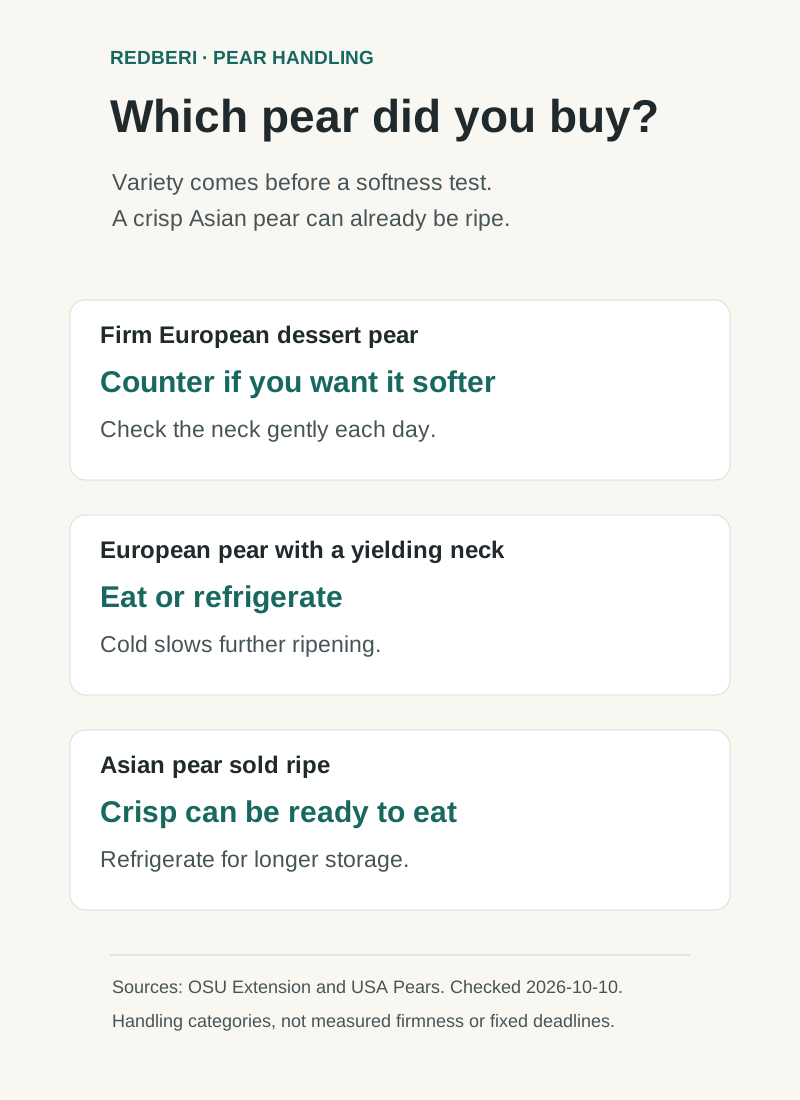
The apple-like shape of many Asian pears is a useful clue, but a name on the label is a better starting point than shape alone. Varieties differ in appearance and texture. Oregon State University’s Asian pear guidance describes fruit that ripens on the tree and is normally sold ripe; its crispness is not evidence that it needs a counter-ripening treatment.
European pears offer a different progression. USA Pears describes a firmer eating stage suitable for a crunchy snack or salad, followed by a juicier stage as the neck softens. You can prefer either. “Ready for my salad” and “ready for a soft dessert” need not mean the same texture.
For a softer European pear, check near the stem
Use gentle pressure at the neck near the stem. If it yields, the pear has reached a softer eating stage. If you want that texture and the neck remains firm, leave the fruit at room temperature and inspect it daily. Once it reaches your preferred stage, refrigerate it to slow further ripening.
Handle it gently rather than repeatedly squeezing the whole fruit. A pressure test is a cue about texture, not a measurement of sweetness or a guarantee that the interior is perfect. Check the fruit when you cut it, too.
For a practical example, imagine buying a firm Anjou for later in the week and an Asian pear for lunch. The Anjou can stay out while you monitor its neck; the Asian pear does not need to join that waiting process. This is an illustrative shopping decision, not a timed experiment with particular fruit.
Why a home-grown pear may need another step
A pear from a tree and a pear from a commercial packing house may have different storage histories. OSU Extension explains that winter European varieties such as Anjou, Bosc and Comice need cool conditioning before ripening correctly, while commercially packed pears should be ready to ripen.
That distinction matters if a home-grown winter pear stays hard. Adding more counter time is not a substitute for knowing its variety, harvest maturity and conditioning history. Ask your local Extension service for guidance suited to the tree and region. The conditioning periods vary; they are not a countdown that starts when you buy a grocery-store pear.
Choose storage for the fruit you have
| What you have | What to do | What to avoid assuming |
|---|---|---|
| Firm European dessert pear | Keep at room temperature if you want it softer; check daily. | Every pear will be ready after an identical number of days. |
| European pear at your preferred softness | Eat it or refrigerate to slow ripening. | Refrigeration restores fruit that has already deteriorated. |
| Asian pear sold ripe | Enjoy its crisp texture; refrigerate for longer storage. | It must develop a soft neck before eating. |
Use a produce guide without losing the variety
Redberi / In Season brings produce selection and storage information together, which helps with the shopping decision before fruit reaches the counter. Keep the variety label with that decision: a general pear entry cannot replace the distinction between a crisp Asian pear and a European pear you want to soften.
For other fruit in the same bowl, see which fruits ripen on the counter. If you are choosing between snacks, the apples and pears guide covers the broader comparison. This page answers the narrower question of why a pear may be crisp and ready to eat.
Sources and scope
Sources checked 10 October 2026: OSU Extension’s Preserving pears, its Asian pears publication (revised May 2024, hosted by UC Agriculture and Natural Resources), and the grower organization USA Pears’ ripening and storage guidance. The chart summarizes those recommendations; it does not report an original firmness, sugar or shelf-life measurement. Harvest maturity, variety and prior handling affect the result.