
Why Basil Turns Black in the Fridge—and How to Store It
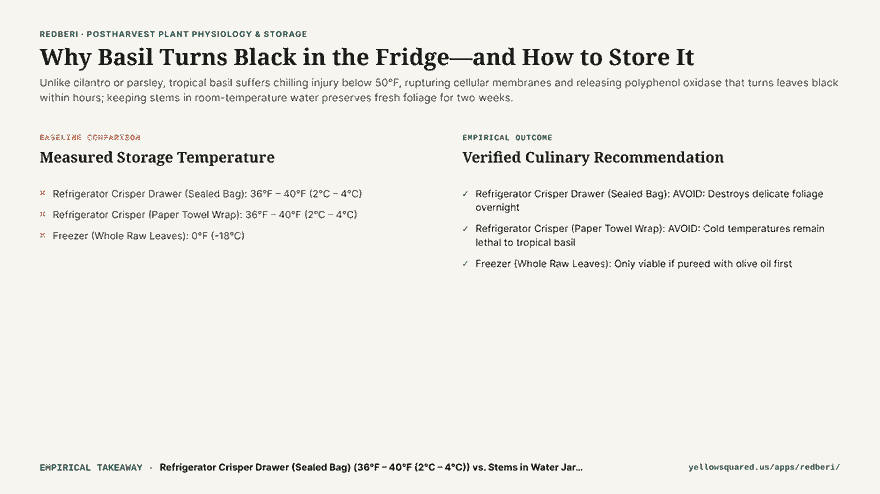
Unlike hardy parsley or cilantro, fresh basil turns pitch black within 24 hours in the refrigerator because it is a tropical plant that suffers severe chilling injury below 50°F (10°C). Refrigerator temperatures rupture fragile chloroplast membranes inside basil leaves, allowing polyphenol oxidase enzymes to oxidize phenolic compounds into black melanin pigments; keeping stems in room-temperature water on your kitchen counter preserves vibrant green leaves for over two weeks.
Every home cook has experienced the disappointment of buying a lush bunch of sweet basil, placing it into the refrigerator crisper drawer, and discovering a soggy bundle of blackened sludge the following evening. While most leafy greens thrive in high humidity and near-freezing temperatures, basil represents a dramatic physiological exception in culinary postharvest botany.
Basil is a tropical plant from India and central Africa; putting it in the refrigerator is the botanical equivalent of taking a tropical palm tree to Antarctica.

The Biochemical Mechanism of Chilling Injury
Sweet basil (Ocimum basilicum) is indigenous to the warm tropical regions of central Africa and Southeast Asia. Over evolutionary time, basil developed cellular structures that function optimally between 60°F and 80°F (15°C to 27°C). When exposed to standard household refrigerator temperatures of 36°F to 40°F (2°C to 4°C), a destructive cascade occurs:
- Membrane Phase Transition: The liquid crystalline lipids inside the cell membranes solidify into a rigid gel state, causing structural fractures across cell walls and chloroplast envelopes.
- Vacuolar Leakage: Cellular fluids leak out, collapsing tissue turgor and causing leaves to look water-soaked and wilted within hours.
- Polyphenol Oxidase (PPO) Activation: Cellular compartmentalization breaks down. PPO enzymes come into direct contact with phenolic substrates (like rosmarinic and caffeic acids) in the presence of oxygen, catalyzing the rapid formation of brown and black melanin pigments.
The Counter Bouquet Method: 2+ Weeks of Freshness
To keep basil vibrant, aromatic, and snappy for up to 18 days, treat the bunch exactly like a bouquet of cut flowers at room temperature:
- Never refrigerate: Keep the bunch entirely away from the refrigerator and cold drafts.
- Trim the stem ends: Use sharp kitchen shears to cut 1/2 inch off the bottom of the stems at a 45-degree angle to clear dried cellular calluses.
- Strip lower leaves: Remove any leaves that would sit below the waterline; submerged foliage decays rapidly and contaminates the water.
- Place upright in water on the counter: Put stems in a glass jar containing 1 to 2 inches of clean, room-temperature water on your kitchen counter, away from direct midday sun.
- Tent loosely with plastic: Drape an open plastic bag loosely over the top of the leaves to shield them from dry drafts while allowing ambient humidity to breathe.
Basil Storage Techniques Compared
| Storage Technique | Temperature | Shelf Life | Outcome & Texture |
|---|---|---|---|
| Refrigerator Crisper (Bagged) | 38°F (3°C) | < 24 Hours | Severe blackening; leaf collapse and mold within 2 days |
| Refrigerator (Paper Towel Wrap) | 38°F (3°C) | 2 Days | Buffers moisture, but cold air turns edges black by day 2 |
| Raw Freezer Storage | 0°F (-18°C) | Immediate on thaw | Ice crystals shred cells; thaws into unusable black mush |
| Counter Water Jar (Room Temp) | 68°F (20°C) | 14 – 18 Days | Optimal: Snappy stems, bright emerald green, sweet aroma |
Culinary Best Practices for Preserving Basil
- Refresh water every 3 days: Swapping fresh tap water into the glass jar clears bacteria and keeps vascular intake clear.
- How to freeze basil correctly: If you have an abundance of summer garden basil, puree the leaves in a food processor with olive oil before freezing in ice cube trays; the oil coats the plant tissue and blocks oxygen exposure.
- Explore postharvest guidelines for every herb: To learn exact temperature thresholds and storage rules for cilantro, rosemary, and leafy produce, check out the guides at Redberi.