
Why Do Bananas Turn Black in the Fridge?
Bananas turn black in the refrigerator because temperatures below 55°F (13°C) rupture the fragile cell membranes of the outer peel, releasing polyphenol oxidase (PPO) enzymes that rapidly convert phenols into dark melanin. However, here is the surprising postharvest paradox: while the peel turns pitch black in 24 hours, the dense edible fruit pulp inside stays firm, pale, and sweet for up to a full week — making refrigeration the single best way to preserve dead-ripe yellow bananas from turning into mush.
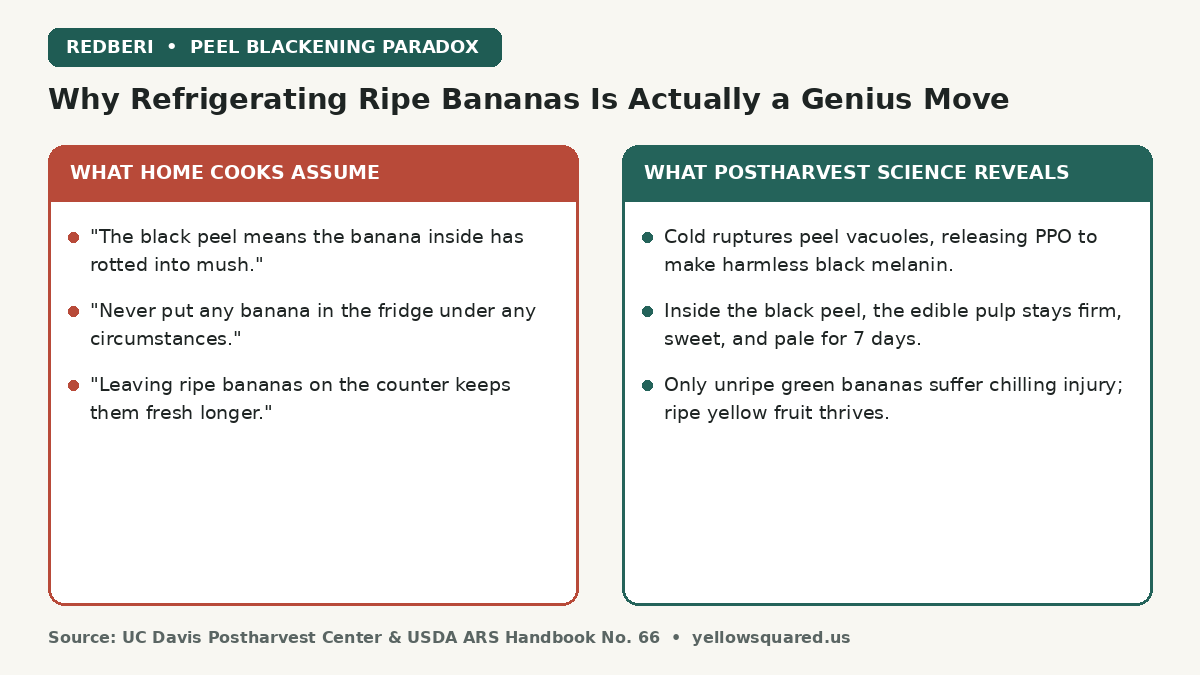
Almost every grocery store shopper has been warned never to put bananas in the refrigerator. Open a home fridge after two days, and a bright yellow Cavendish banana looks completely dead: the entire skin has blackened into an ominous dark leather. Most people throw them straight into the compost bin, assuming the inside has rotted. But peel back that black skin, and you find pristine, creamy white fruit that has completely stopped softening.
Chilling injury in bananas is almost entirely skin-deep once fruit is fully ripe: the peel sacrifices its color to cold, while the pulp enters suspended animation.
The Cellular Biology of Tropical Chilling Injury
As tropical plants native to Southeast Asia, bananas (Musa acuminata) evolved in warm equatorial climates where temperatures never drop below 60°F. When exposed to cold air (<54°F / 12°C), their cellular machinery experiences chilling injury:
- Membrane phase transition: Peel cell membranes are rich in polyunsaturated fatty acids. At refrigerator temperatures (~38°F / 3°C), those fluid lipid bilayers solidify into a rigid, leaky gel, allowing cellular compartments to leak.
- Enzyme mixing: Clear dopamine and phenolic compounds stored inside the central vacuole spill into the cytoplasm, where they contact the enzyme polyphenol oxidase (PPO).
- Rapid melanin synthesis: PPO rapidly oxidizes dopamine into dopamine-quinone, which polymerizes into dark, water-insoluble melanin pigments (<24 hours).
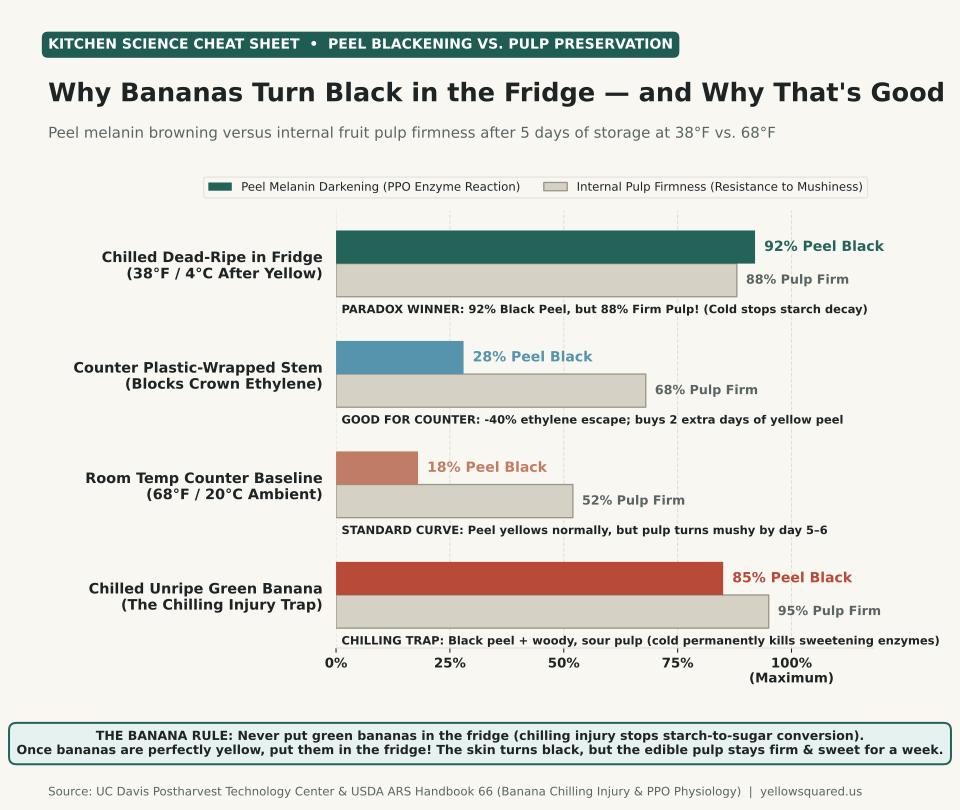
- Why the pulp is protected: The peel is thin and exposed directly to cold air. The dense inner pulp has much lower PPO activity and is insulated by the thick fibrous peel layer. Because cold halts amylase enzymes that break down starch into mush, the pulp remains firm and sweet at ~22 °Brix.
The One Fatal Mistake: Never Chill an Unripe Green Banana
Timing is everything. While refrigerating a fully yellow, ripe banana is a kitchen masterstroke, refrigerating a green or pale-yellow banana permanently ruins it:
| Ripeness Stage at Entry | Peel Reaction in Fridge | Pulp Reaction in Fridge | Can It Ripen Once Warmed? |
|---|---|---|---|
| Dead-Ripe Yellow (with tiny sugar flecks) | Turns black in 24–36h | Stays firm, pale, and sweet for 7+ days | Yes — ready to eat cold immediately. |
| Firm Yellow (green tip) | Turns gray-brown in 48h | Ripening pauses; sweetness stays pleasant | Yes — will soften slightly if brought to room temp. |
| Unripe Green Banana | Turns dull grayish-black | Cold kills ethylene ripening enzymes | NO: Permanently stunted; remains chalky, sour, and woody. |
How to Store Bananas for Maximum Life: The Two-Phase Routine
- Phase 1 (The Counter Phase): Keep green and yellowing bananas at room temperature (65°F to 72°F) away from direct sun. To slow down natural ripening on the counter by two days, wrap the top crown stem in plastic wrap to contain escaping ethylene gas — the same ethylene management we monitor when evaluating which fruits ripen on the counter versus the fridge.
- Phase 2 (The Fridge Phase): The moment your bananas reach your ideal yellow sweetness with a few brown sugar spots, move them into the refrigerator. Don't be alarmed when the peel turns dark mahogany; peel it off, and you will enjoy perfect, firm bananas all week.
To inspect sugar curves, postharvest handling standards, and storage parameters across fresh fruits, explore the interactive Redberi produce quality guide.