
Why Do Potatoes Turn Green and Are They Safe to Eat?
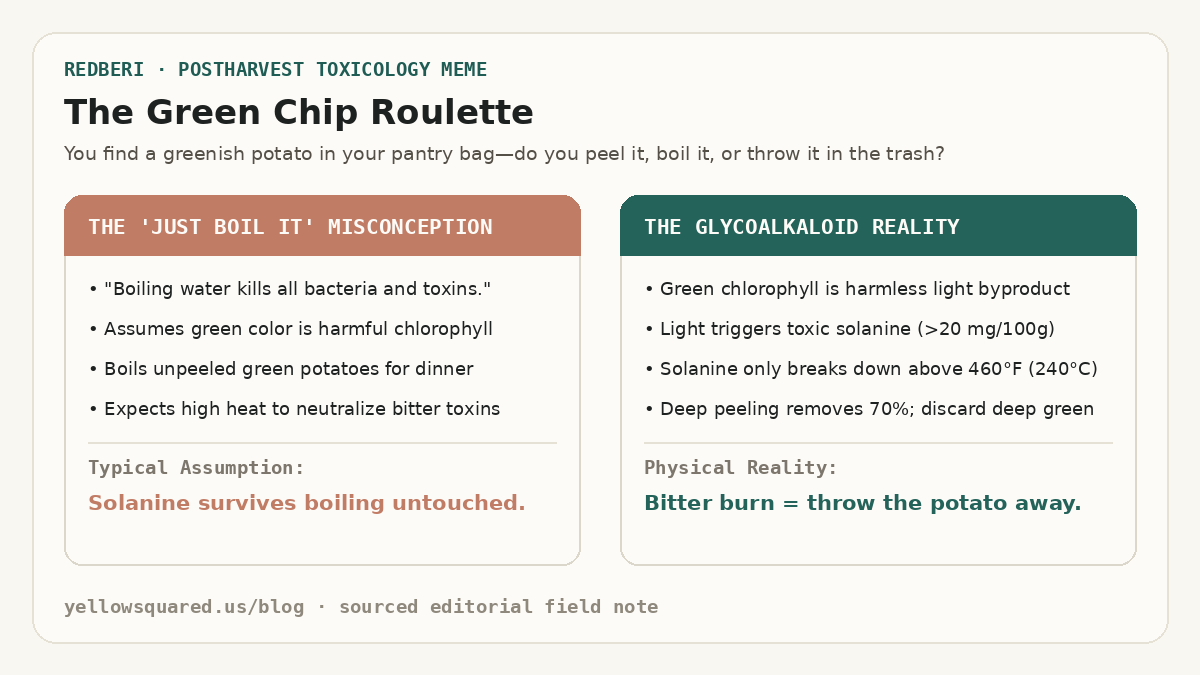
Almost everyone has opened a bag of russet or gold potatoes and found a tuber with a distinct green shoulder or greenish skin under the eyes. Many home cooks wonder: can I just cut off the green part, or will cooking destroy the toxins? According to postharvest toxicology guidelines from the USDA Agricultural Research Service (ARS) and the UC Davis Postharvest Research and Extension Center, the green color itself is just chlorophyll—the harmless plant pigment that allows plants to photosynthesize. However, the exact same light exposure that produces green chlorophyll also triggers the potato to synthesize high concentrations of bitter, toxic steroidal glycoalkaloids, primarily α-solanine and α-chaconine.
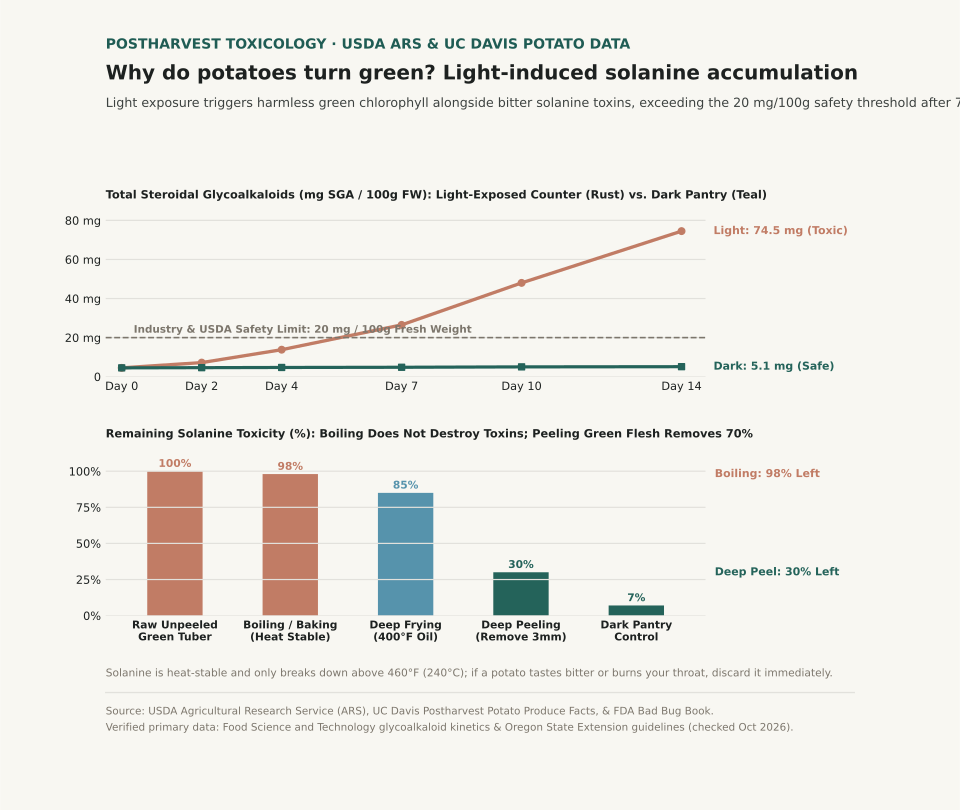
While fresh, unexposed potatoes contain safe baseline levels of 2 to 8 milligrams of glycoalkaloids per 100 grams of fresh weight, tubers exposed to grocery store fluorescent lighting or sunlit kitchen counters for 7 to 10 days surge past the USDA safe consumption threshold of 20 mg per 100g, posing a genuine risk of gastrointestinal distress and neurotoxic symptoms.
The green skin isn't poisonous—it is an unmistakable visual warning light signaling that the potato has synthesized hazardous concentrations of heat-stable solanine toxins.
Why Potatoes Produce Solanine When Exposed to Light
The potato tuber (Solanum tuberosum) is a modified underground plant stem, not a root. When exposed to light—either in the field from shallow planting or under artificial grocery store illumination—the tuber's dormant skin cells behave as if they have broken through the soil surface into sunlight. Plant genes activate two simultaneous biochemical pathways:
- Chlorophyll Biosynthesis: Amyloplasts in the outer 1 to 2 millimeters of flesh convert into chloroplasts, producing bright green chlorophyll. Chlorophyll is completely non-toxic and tasteless, but it serves as an exact indicator of light exposure.
- Steroidal Glycoalkaloid (SGA) Synthesis: To protect the exposed shoot from being eaten by insects, fungi, and herbivores, the potato synthesizes α-solanine and α-chaconine. These bitter natural pesticides concentrate heavily in the potato skin, the "eyes" (buds), and the outer 2 to 3 millimeters of the underlying vascular tissue.
Solanine Toxicity: Symptoms and the Safe 20 mg/100g Limit
In medical toxicology records cataloged in the FDA Bad Bug Book, glycoalkaloids are natural cholinesterase inhibitors that disrupt cell membrane integrity and neurological function. The international food safety threshold established by the USDA and commercial growers limits total glycoalkaloids to 20 mg per 100 grams of fresh potato (200 mg/kg).
If a person consumes potatoes exceeding this threshold, symptoms typically appear within 6 to 12 hours:
- Oral Sensation: An immediate burning, bitter, or scratchy stinging sensation on the tongue, throat, and roof of the mouth.
- Gastrointestinal Distress: Severe abdominal cramps, nausea, vomiting, and acute diarrhea.
- Neurological Symptoms: In severe poisoning cases, headaches, dizziness, confusion, low blood pressure, and dilated pupils.
If you take a bite of cooked potato and taste a strong bitter tang or feel a burning tingle in your throat, spit it out immediately—solanine has a distinct caustic taste.
Does Cooking Destroy Solanine? (The Heat-Stability Myth)
A widespread kitchen myth claims that boiling, baking, or microwaving green potatoes neutralizes the toxins. This is biochemically false. Solanine and chaconine are exceptionally heat-stable chemical compounds that do not begin to decompose until temperatures reach 460°F to 500°F (240°C to 260°C).
| Preparation Method | Cooking Temperature | Toxin Breakdown (%) | Remaining Solanine (%) | Safety Verdict on Green Tubers |
|---|---|---|---|---|
| Boiling with Skin On | 212°F (100°C) | <2% | 98% remaining | Unsafe; solanine does not leach into boiling water |
| Baking / Roasting (Skin On) | 400°F (204°C) | <3% | 97% remaining | Unsafe; oven heat is far below solanine decomposition point |
| Deep Frying (Potato Chips) | 375°F (190°C) oil | 10% – 15% | 85% remaining | Marginal; high oil heat slightly degrades surface SGAs |
| Standard Thin Peeler (1 mm) | Mechanical removal | ~45% removed | 55% remaining | Marginal; underlying green flesh still holds concentrated toxins |
| Deep Peeling (Remove 3 mm+ Green) | Carve away skin + green cortex | 70% – 85% removed | 15% – 30% remaining | Safe if remaining potato flesh is completely white/cream |
| Discarding Deeply Green Tubers | Full disposal | 100% avoided | 0% | Safest choice; completely eliminates poisoning risk |
How to Store Potatoes to Prevent Greening and Spoilage
To keep your potatoes fresh, firm, and toxin-free for up to three months:
- Store in total darkness: Keep potatoes in a dark pantry, cardboard box, or breathable burlap bag. Never store them on open kitchen countertops in clear plastic produce bags.
- Maintain cool temperatures (45°F to 50°F / 7°C to 10°C): Warm room temperatures accelerate sprouting and respiration, while temperatures below 40°F (like your main refrigerator) cause cold-induced sweetening where starches convert into acrylamide-forming sugars. A cool basement, pantry, or cellar is optimal.
- Keep potatoes away from onions: Onions release ethylene gas and moisture that break potato eye dormancy, causing rapid sprouting and accelerating solanine accumulation around the eyes.
Want to check the storage rules and freshness indicators for every vegetable and root crop in your kitchen? Download Redberi for iPhone or Get Redberi on Android, or Open Redberi in your browser for instant produce shelf-life guides.