
Pomegranate Ripeness Indicators: Why Round Pomegranates Are Underripe
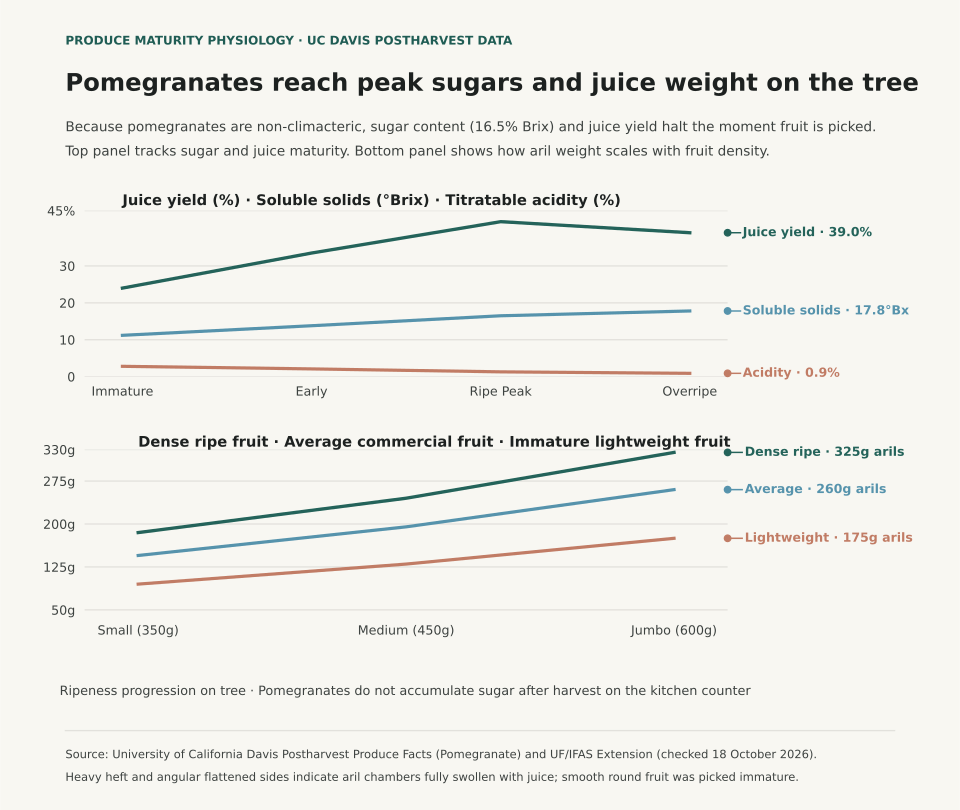
Unlike bananas, apples, and avocados, pomegranates are non-climacteric fruit that cease developing sugars and flavor compounds the moment they are clipped from the orchard tree. According to postharvest handling research from the University of California Davis Postharvest Technology Center and the University of Florida IFAS Extension, pomegranates ripen fully on the branch, accumulating soluble solids (sugars) between 16% and 18% Brix before harvest. Once picked, starch reserves do not convert to sugars; an underripe pomegranate displayed in a supermarket bin will never soften, sweeten, or improve on your kitchen counter.
Shoppers frequently evaluate pomegranates using citrus or melon heuristics, searching for a smooth, spherical sphere with uniform crimson blush. In a produce aisle, a perfectly round, spherical pomegranate is often an indicator of underripe fruit that was harvested prematurely before the inner arils fully expanded against the outer rind. Learning the physical indicators of tree-ripened fruit ensures you select sweet, juicy arils rather than pale, tart seed pods.
The Three Physical Ripeness Tests in the Supermarket Aisle
To pick a ripe pomegranate that is ready to open immediately, use three sensory cues documented in commercial postharvest standards:
First, examine the shape for flattened, angular sides. As pomegranate arils reach peak maturity, they swell with juice and press firmly outward against the interior locular membranes and the outer pericarp (rind). This internal pressure causes the fruit to transition from a smooth sphere into an octagonal or hexagon-like shape with distinct flattened facets and subtle vertical ridges.
Second, judge heft and weight relative to size. A ripe pomegranate consists of over 50% juice by aril weight. When comparing two fruits of identical diameter, select the one that feels noticeably heavy in your palm. A light pomegranate has either dried out in cold storage or was harvested before juice accumulation finished.
Third, inspect rind texture rather than exterior color. Color is an unreliable ripeness metric: cultivars like 'Wonderful' develop deep crimson skin, while varieties like 'Eversweet' or 'Sirenevyi' remain pale pink or greenish-tan even at peak 18° Brix sweetness. Look for skin that is taut, matte, and slightly leathery rather than glossy. If the rind yields slightly to gentle thumb pressure without bruising, the arils beneath are plump and tender.
| Physical Indicator | Tree-Ripe (Ready to Eat) | Underripe (Picked Too Early) | Why It Matters |
|---|---|---|---|
| Rind Shape | Hexagonal or flattened angular sides with ridges | Smooth, perfectly spherical globe | Arils expand with juice, pushing out against rind |
| Density / Heft | Feels surprisingly heavy for its physical volume | Feels lightweight, hollow, or airy in palm | Juice content comprises >50% of ripe aril mass |
| Skin Texture | Taut, matte, leathery surface | Slick, glossy, hard, porcelain-smooth skin | Matte finish signals natural cuticle wax maturation |
| Tap Sound | Deep, resonant, solid metallic thud | Hollow, dull, or high-pitched clatter | Dense fluid volume transmits vibration solidly |
| Counter Behavior | Ready immediately; keeps 2 weeks at 45–50°F | Never ripens; dries out into sour seed pods | Non-climacteric fruit lacks starch for conversion |
Home Storage and Chilling Injury Prevention
Whole pomegranates stored at standard room temperature (68–72°F) remain in good condition for approximately one to two weeks away from direct sunlight. For longer storage up to two months, hold whole pomegranates at 45°F to 50°F (7°C to 10°C) with 90% to 95% relative humidity. Avoid storing whole pomegranates in home refrigerators set below 41°F (5°C) for more than a few days; low temperatures can cause chilling injury, including brown internal skin discoloration and pitting.
Once you extract the arils from the rind, refrigerate them in an airtight container lined with a dry paper towel, where they will maintain crisp texture and sweet flavor for five to seven days. For detailed produce storage advice and seasonal availability charts, see How to Read Fruit PLU Codes: 4-Digit vs. 9-Digit Organic Stickers and the Supermarket Produce Ripeness Guide.
Redberi (In Season) provides variety profiles, seasonal ripeness indicators, and cold-storage guidelines for hundreds of fruits and vegetables. Open Redberi in your browser, Download Redberi for iPhone, or Get Redberi on Android.