
Why Do Cut Apples Turn Brown and How to Stop It
The best way to prevent cut apples from turning brown is to soak fresh slices in a mild salt-water solution (1/2 teaspoon kosher salt per quart of cool water) for 5 minutes, then drain and rinse briefly with fresh water. Chloride ions directly bind to the copper-containing active site of polyphenol oxidase (PPO), shutting down enzymatic browning for up to 12 hours without making the apple taste salty or masking its natural sweetness the way sour lemon juice does.
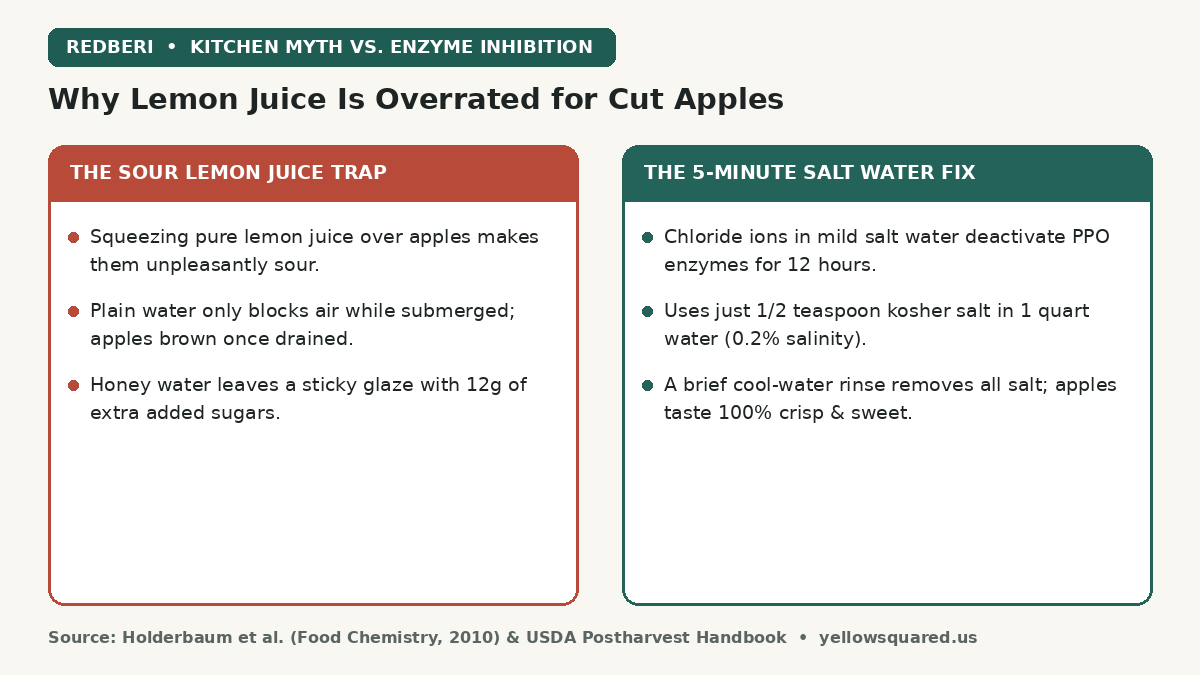
Anyone packing school lunches or preparing a party fruit platter knows the frustration of watching crisp, pale apple slices turn a muddy amber-brown in less than twenty minutes. The standard kitchen advice is to drench the slices in fresh lemon juice. While citric acid does suppress browning, it also overpowers the apple's crisp varietal aroma and makes sweet Honeycrisp or Gala slices taste aggressively sour. Understanding the underlying biochemistry reveals why a simple mineral soak outperforms acid every time.
Enzymatic browning requires four ingredients: phenolic substrates, copper-dependent PPO enzymes, air, and cellular damage. Neutralizing the copper core stops the reaction cold.
The Four-Stage Chemistry of Apple Browning
An intact, uncut apple never turns brown on the tree because the fruit keeps its reactive components isolated in separate cellular compartments. The chemical chain reaction starts only when your knife blade breaches the plant cell walls:
- Compartmental rupture: Clear phenolic compounds (primarily chlorogenic acid and epicatechin) are stored inside the central vacuole. The enzyme polyphenol oxidase (PPO) is sequestered outside in the plastids and cytoplasm. Slicing ruptures cell membranes and mixes them together.
- Oxygen activation: In the presence of atmospheric oxygen, PPO uses its twin copper ions (Cu2+) to catalyze two rapid reactions: first hydroxylating monophenols into o-diphenols, then dehydrogenating o-diphenols into reactive o-quinones.
- Polymerization into melanin: Quinones are colorless but unstable. They spontaneously react with amino acids and proteins, polymerizing into dark, insoluble melanin pigments (<20 minutes at room temperature).
- Flavor and texture loss: As quinones cross-link with cell-wall pectin, the apple flesh softens and loses its signature crisp snap — the exact mechanical breakdown we track when comparing apple versus peach postharvest storage.
Ranked Comparison: 5 Methods to Stop Apple Browning
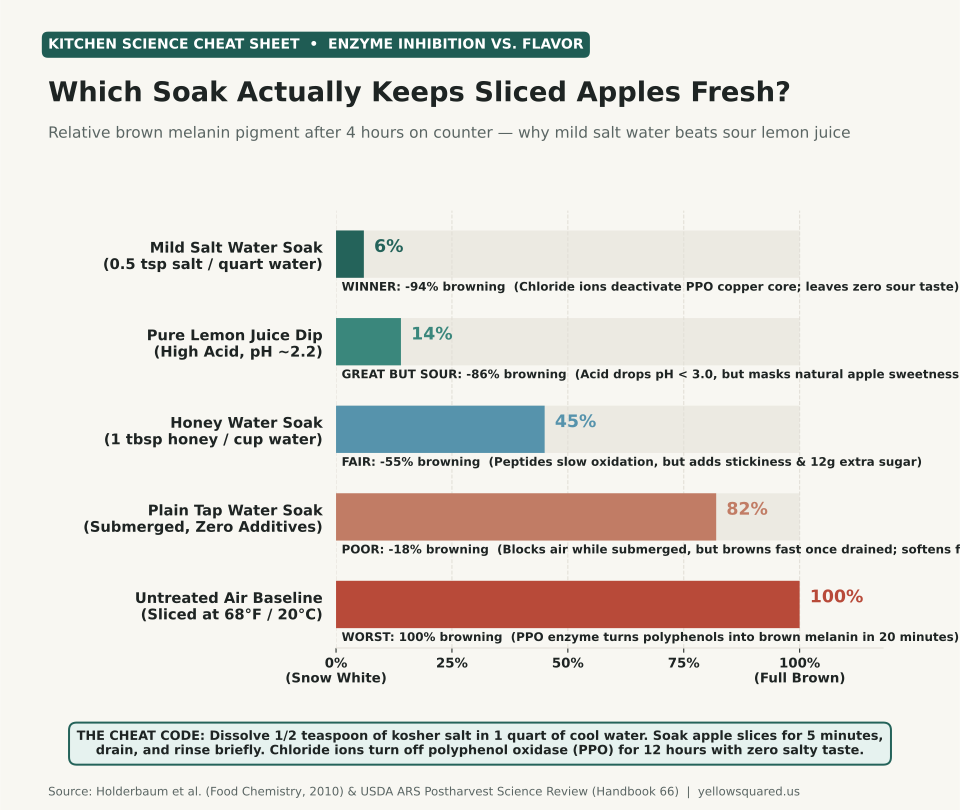
The table below compares five common kitchen methods across relative browning reduction, enzyme kinetics, and consumer taste impact:
| Kitchen Method | Browning Score (4h) | PPO Enzyme Inhibition | Sensory & Flavor Verdict |
|---|---|---|---|
| Mild Salt Water (0.5 tsp/qt) | 6% (-94%) | ~94% | Undisputed Winner: Chloride ions bind PPO copper; brief rinse leaves 100% crisp, sweet flavor with zero salt taste. |
| Pure Lemon Juice Dip | 14% (-86%) | ~86% | High citric acid lowers pH below 3.0 to slow PPO, but masks varietal sweetness with sharp, puckering sourness. |
| Honey Water (1 tbsp/cup) | 45% (-55%) | ~55% | Peptide antioxidants in raw honey slow quinone oxidation, but leaves slices sticky with 12g of added sugar. |
| Plain Tap Water Soak | 82% (-18%) | ~18% | Blocks oxygen only while submerged; once drained, residual moisture accelerates softening and rapid browning. |
| Untreated Air Baseline (68°F) | 100% (Baseline) | 0% | Flesh turns visibly brown in 15 to 25 minutes; quinone cross-linking degrades texture and fresh aroma. |
The 5-Minute Salt-Water Protocol (Step-by-Step)
- Step 1 — Mix the brine: Dissolve exactly 1/2 teaspoon of kosher salt (or 1/4 teaspoon fine table salt) into 1 quart (4 cups) of cool water. This creates an ultra-mild 0.2 percent saline solution.
- Step 2 — Submerge slices for 5 minutes: Cut your apples and immediately submerge the slices in the brine for 3 to 5 minutes. Slices will float, so place a clean paper towel on top to keep them submerged.
- Step 3 — Quick freshwater rinse: Transfer slices to a colander and rinse under cold running tap water for 5 seconds. This washes away any surface sodium while leaving chloride ions locked inside the ruptured edge cells.
- Step 4 — Pat dry and pack: Shake dry and seal in an airtight container. Slices remain snow-white, crunchy, and sweet for up to 12 hours in a lunchbox or 48 hours in the refrigerator.
To evaluate seasonal sugar accumulation, acid ratios, and cultivar profiles across crisp dessert apples, launch the Redberi produce quality guide.