
Why Ethylene Producers Accelerate Spoilage in Sensitive Crops
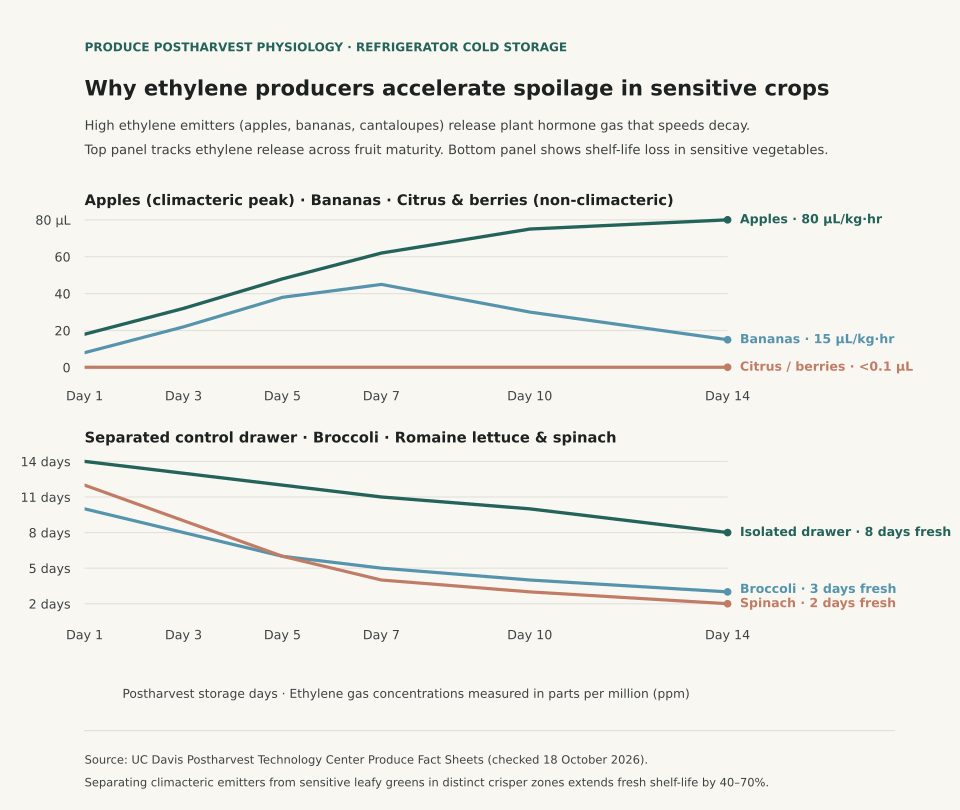
Storing high ethylene-producing fruits alongside ethylene-sensitive vegetables in the same refrigerator compartment accelerates chlorophyll breakdown, texture loss, and spoilage, reducing the usable shelf-life of fresh produce by 40% to 70%. According to postharvest storage research from the University of California Davis Postharvest Technology Center and postharvest standards in USDA Agricultural Handbook 66, ethylene gas (C2H4) is a naturally occurring plant hormone that acts as a ripening trigger. While climacteric fruits like apples, ripe bananas, and cantaloupes produce high volumes of ethylene (30 to 80 microliters per kilogram per hour at room temperature), exposing sensitive crops like spinach, broccoli, and carrots to even trace concentrations (0.1 parts per million) induces rapid yellowing, bitterness, and cellular collapse.
Many home cooks toss all fresh produce into a single refrigerator crisper drawer under the assumption that cool temperatures halt biochemical decay. While refrigeration slows metabolic respiration rates, low temperatures do not eliminate ethylene sensitivity. In an unventilated drawer where apples share air space with romaine lettuce, ethylene gas accumulates and triggers senescence pathways within 48 to 72 hours—causing leafy greens to turn translucent and carrots to develop bitter isocoumarin compounds long before their normal shelf-life expires.
Classifying Produce: High Emitters vs. Sensitive Receivers
Effective produce storage requires separating crops that generate ethylene from crops that suffer from its presence. Postharvest researchers categorize supermarket produce into three distinct operational groups:
| Produce Category | Representative Items | Ethylene Production Rate | Sensitivity Level | Storage Requirement |
|---|---|---|---|---|
| High Emitters (Climacteric) | Apples, Pears, Cantaloupes, Avocados (Ripe), Passionfruit | High to Very High (30–80 μL/kg·hr) | Moderate | Keep in dedicated crisper drawer or ventilated fruit bowl |
| Moderate Emitters | Tomatoes, Peaches, Plums, Figs | Moderate (10–30 μL/kg·hr) | Moderate to High | Counter until ripe, then isolate in refrigerator |
| Extreme Sensitivity | Leafy Greens, Spinach, Romaine, Herbs, Broccoli, Asparagus | Very Low (<0.1 μL/kg·hr) | Extreme | Isolate in high-humidity drawer away from all fruit |
| High Sensitivity (Root/Foliage) | Carrots, Cucumbers, Squash, Green Beans | Very Low (<0.1 μL/kg·hr) | High | Keep dry in vegetable crisper; prevents bitter isocoumarin |
| Ethylene Insensitive | Citrus (Oranges, Lemons, Limes), Berries, Grapes, Potatoes | Very Low (<0.1 μL/kg·hr) | Low | Can share shelf space with emitters without damage |
The physiological damage manifests differently depending on the vegetable species. In broccoli, exposure to ethylene causes the compact green florets to yellow within 48 hours as chlorophyll degrades and abscission occurs. In carrots, ethylene exposure stimulates the biosynthesis of 6-methoxymellein (isocoumarin), a chemical compound that imparts an unpleasant, harsh bitter taste to raw and cooked carrots without changing exterior color.
Setting Up Refrigerator Crisper Drawers for Maximum Longevity
Modern refrigerators provide dual crisper drawers with adjustable humidity baffles. To maximize grocery longevity, organize produce into two dedicated zones:
First, designate one drawer as the High-Humidity Vegetable Zone. Close the humidity slider to trap moisture, and store leafy greens, herbs, broccoli, celery, and carrots here. This drawer should contain zero tree fruit. Maintaining 90% to 95% relative humidity in this enclosed zone prevents wilting while keeping the air entirely free of ethylene gas.
Second, designate the second drawer as the Low-Humidity Fruit Zone. Open the slider slightly to allow moisture and ethylene gas to vent freely, preventing fungal mold development. Store apples, pears, and ripe stone fruit in this drawer. For fruits that do not ripen post-harvest, such as pomegranates, read Pomegranate Ripeness Indicators: Why Round Pomegranates Are Underripe and check How to Read Fruit PLU Codes to identify cultivars before shopping.
Redberi (In Season) catalogs produce storage requirements, ethylene sensitivity guidelines, and seasonal ripeness indicators for hundreds of supermarket fruits and vegetables. Open Redberi in your browser, Download Redberi for iPhone, or Get Redberi on Android.