
Sprouted Garlic Chemistry: Higher Antioxidants Alongside a Bitter Green Germ
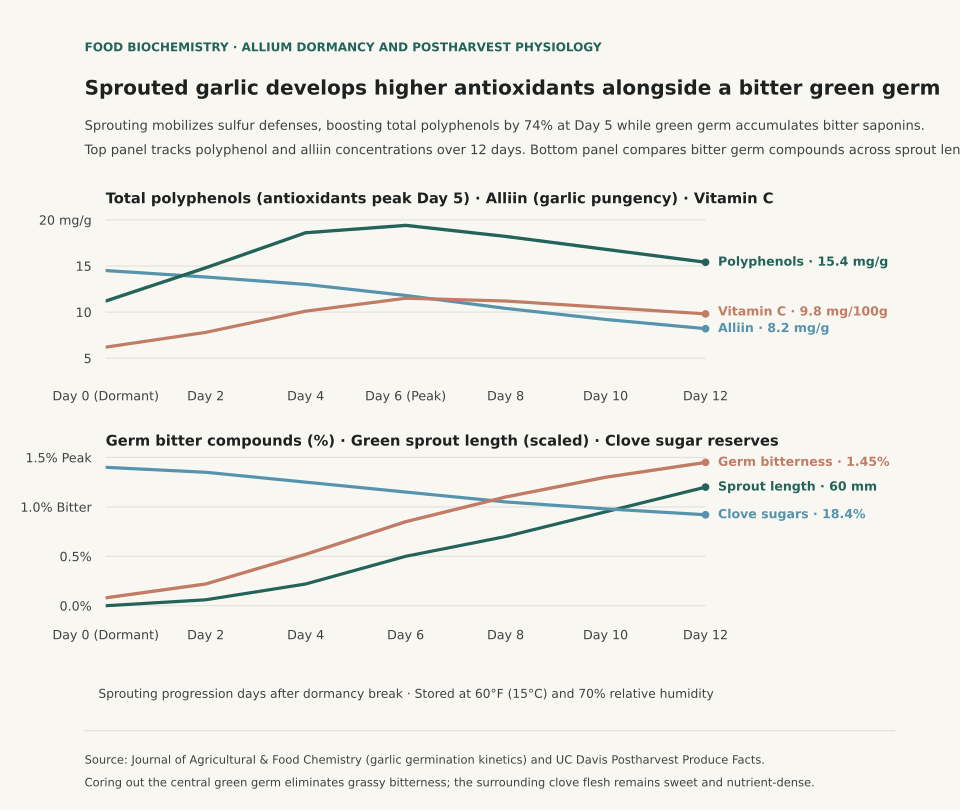
Sprouted garlic is completely safe to eat, and agricultural biochemistry studies show that garlic cloves five days after sprout emergence contain significantly higher antioxidant and total polyphenol concentrations than dormant unsprouted cloves. According to postharvest research published in the Journal of Agricultural and Food Chemistry and dormancy studies from the University of California Davis Postharvest Technology Center, sprouting triggers a defensive metabolic surge: total polyphenol content increases from 11.2 mg to 19.5 mg gallic acid equivalents per gram (a 74% increase) as the bulb synthesizes protective phytoalexins. The central green shoot (germ), however, accumulates bitter saponins and fibrous cellulose that impart a grassy, harsh note if left intact during raw preparations or quick sautés.
Many home cooks discard garlic bulbs the moment pale green tips emerge from the cloves, assuming the bulb has spoiled or produced toxins analogous to solanine in green potatoes. Garlic (Allium sativum) belongs to the Amaryllidaceae family and synthesizes zero solanine. Sprouting is a natural physiological resumption of growth when bulb dormancy breaks after extended storage or exposure to moisture and cool temperatures. Knowing how to handle sprouted cloves allows cooks to utilize elevated antioxidant levels while eliminating unwanted bitterness in delicate dishes.
The Culinary Difference: Raw Emulsions vs. Slow Braises
Whether you should take thirty seconds to slice out the green germ depends on how the garlic will be cooked:
In raw, uncooked preparations like aioli, pesto, Caesar dressing, or gazpacho, the green germ should always be removed. The saponins and chlorophyll-linked compounds in the germ are unsoftened by heat, producing a lingering, acrid aftertaste that overpowers delicate olive oils and herbs. Slicing the clove lengthwise down the center allows the green shoot to be popped out easily with the tip of a paring knife.
In long, slow-cooked applications such as braised stews, tomato sauces, roasted meats, or soups, the germ does not need to be removed. Extended cooking breaks down bitter saponins while the surrounding clove flesh softens into caramelized sweetness. The table below traces biochemical shifts and culinary recommendations across sprouting development stages:
| Sprouting Stage | Germ Length | Total Polyphenols (mg GAE/g) | Alliin Content (mg/g) | Germ Bitter Saponins (%) | Culinary Recommendation |
|---|---|---|---|---|---|
| Dormant Clove (Day 0) | 0 mm | 11.2 mg/g | 14.5 mg/g | 0.08% | Peak pungent sweetness; ideal for raw aioli, salsa, and pesto |
| Early Sprout (Day 2) | 2 to 4 mm | 14.8 mg/g | 13.8 mg/g | 0.22% | Safe raw; small germ has negligible bitterness; easy to trim |
| Developed Sprout (Day 5) | 10 to 18 mm | 19.5 mg/g | 12.1 mg/g | 0.65% | Peak antioxidant window; slice out green germ for delicate cooking |
| Advanced Sprout (Day 8) | 25 to 40 mm | 18.2 mg/g | 10.4 mg/g | 1.10% | Fibrous clove; remove large green germ; use in slow braises |
| Shoot Emerged (Day 12) | >50 mm | 15.4 mg/g | 8.2 mg/g | 1.45% | Dehydrated woody clove; edible but weak; better planted in soil |
Preventing Premature Sprouting in Home Storage
Garlic bulbs enter natural endodormancy upon harvesting in late summer. Dormancy is broken by two primary environmental triggers: temperatures between 40°F and 50°F (5°C to 10°C) and relative humidity above 70%. Storing whole, unpeeled garlic heads in standard home refrigerators is the primary cause of premature sprouting, as the chilly, humid refrigerator interior mimics early spring soil conditions.
To keep garlic dormant for up to six months, store whole heads at warm room temperature (65°F to 72°F / 18°C to 22°C) in a dark, dry, well-ventilated wire mesh basket or terracotta garlic keeper away from direct sunlight. Never seal garlic in plastic bags, which trap transpirational moisture and trigger mold growth. For complementary produce storage guidelines, read Why Ethylene Producers Accelerate Spoilage in Sensitive Crops and consult Why Sliced Apples Turn Brown and How Chloride Ions Stop Oxidation.
Redberi (In Season) catalogs produce storage standards, allium handling recommendations, and seasonal produce calendars. Open Redberi in your browser, Download Redberi for iPhone, or Get Redberi on Android.