
Why Sliced Apples Turn Brown and How Chloride Ions Stop Oxidation
Sliced apples turn brown within minutes because cutting ruptures interior cellular membranes, allowing the latent enzyme polyphenol oxidase (PPO) to mix with phenolic compounds and atmospheric oxygen. According to food biochemistry research from the University of California Davis Department of Food Science and Technology and the USDA Agricultural Research Service, this reaction produces colorless ortho-quinones, which rapidly polymerize with cellular amino acids to synthesize dark brown melanin pigments. While squeeze lemon juice is a common household remedy, a mild 0.2% salt water brine (one-half teaspoon of salt dissolved in one cup of cold water) stops enzymatic browning for eight to twelve hours through chloride ion competitive inhibition without imparting any perceptible salt flavor.
Parents packing school lunches and meal prep cooks often avoid slicing apples in advance because oxidized brown slices look unappetizing. While lemon juice prevents browning by lowering the surface pH below 3.0 to denature the PPO enzyme, high acidity alters the natural sweetness of apples, leaving slices tasting sharply sour. Understanding the biochemical pathway of enzymatic browning allows home cooks to use targeted enzyme inhibitors that preserve crisp texture and clean apple flavor.
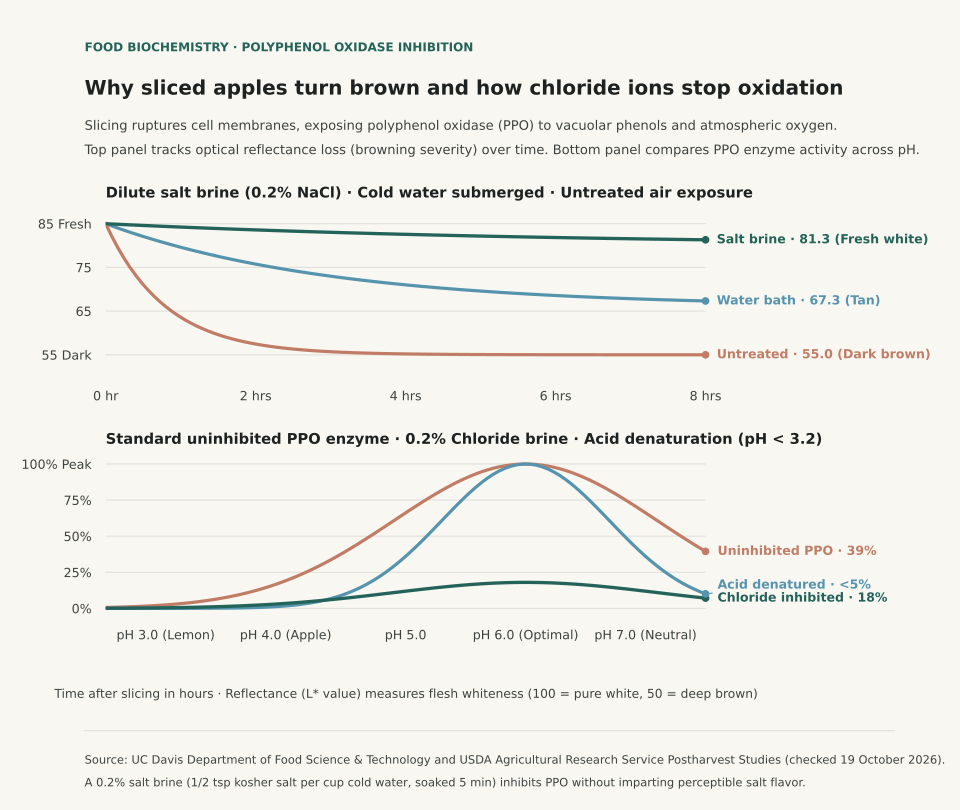
The Enzymatic Cascade: Plastids, Vacuoles, and Oxygen
In an intact apple, the chemicals required for browning are physically separated into distinct microscopic cellular compartments. Polyphenol oxidase enzymes are sequestered inside the plastids (chloroplasts and leucoplasts), while phenolic substrates—primarily chlorogenic acid, epicatechin, and procyanidins—are stored inside the fluid-filled central vacuole. Intact cell walls prevent these components from contacting each other.
The mechanical action of a kitchen knife crushes cells along the cut surface, tearing membrane barriers. In the presence of ambient oxygen, PPO catalyzes two sequential chemical steps: first, the hydroxylation of monophenols into o-diphenols (cresolase activity), followed by the oxidation of o-diphenols into o-quinones (catecholase activity). These highly reactive quinones then spontaneously cross-link with cellular proteins, forming brown melanin complexes that stiffen and darken the damaged tissue.
| Inhibition Method | Biochemical Mechanism | Browning Delay Duration | Flavor Impact on Apple | Texture & Crispness Retention |
|---|---|---|---|---|
| Untreated Air Exposure | None (rapid PPO oxidation) | 15 to 20 minutes | Oxidized, stale, cardboard notes | Softens rapidly; loses cell turgor |
| Submerged in Cold Water | Physical barrier to atmospheric oxygen | 1 to 2 hours | Zero flavor change | Maintains crispness; leaches sugars if prolonged |
| Dilute Salt Brine (0.2% NaCl) | Chloride ion competitive PPO inhibition | 8 to 12 hours | Zero detectable saltiness (clean apple taste) | Retains 96% crispness |
| Lemon Juice / Citric Acid | Acid denaturation of PPO enzyme (pH < 3.0) | 10 to 14 hours | Noticeable sour, tart surface coating | Acid slightly softens outer pectin layer |
| Ascorbic Acid (Vitamin C) | Chemical reduction of quinones back to phenols | 12 to 16 hours | Neutral to faintly tart | Retains 98% crispness |
The 5-Minute Salt Brine Protocol
The salt brine method relies on competitive inhibition by chloride ions (Cl⁻), which bind to the copper-containing active site of the PPO enzyme, blocking phenolic substrates from attaching without permanently altering fruit chemistry. To prepare apple slices for lunchboxes or party platters:
Dissolve one-half teaspoon of fine table salt or kosher salt (approximately 2.5 grams) into one quart of cold tap water (producing an approximate 0.2% sodium chloride solution). Slice the apples, submerge the slices completely in the salt brine for three to five minutes, remove them, and give them a brief five-second rinse under cold running water before draining. Slices stored in an airtight container or reusable silicone bag in the refrigerator will maintain crisp, creamy-white flesh for up to twenty-four hours without tasting salty.
Cultivars vary significantly in their natural browning rates: varieties like Honeycrisp, Cortland, and Granny Smith contain lower baseline PPO enzyme concentrations and brown slowly, while Red Delicious and Gala possess high PPO activity and oxidize within ten minutes of slicing. For produce storage guidelines and ethylene sensitivity rules, read Why Ethylene Producers Accelerate Spoilage in Sensitive Crops and consult How to Read Fruit PLU Codes: 4-Digit vs. 9-Digit Organic Stickers.
Redberi (In Season) catalogs apple cultivar profiles, postharvest handling recommendations, and seasonal produce calendars. Open Redberi in your browser, Download Redberi for iPhone, or Get Redberi on Android.