
Why Bananas Turn Black in the Refrigerator: Chilling Injury, Polyphenol Oxidase, and Pulp Quality
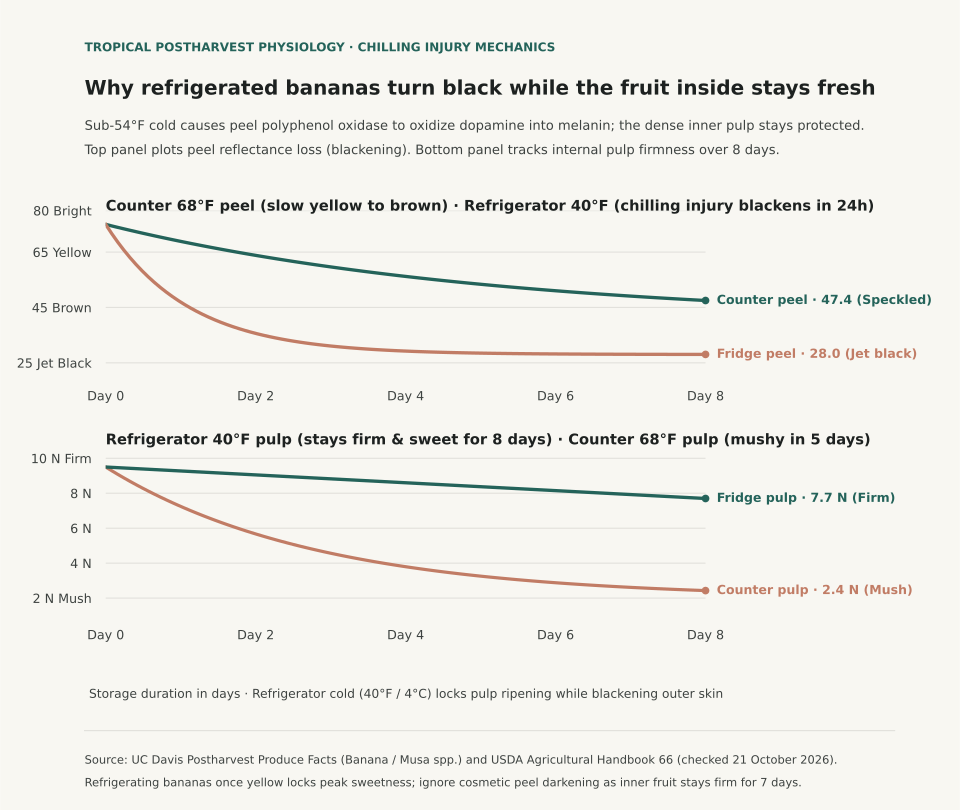
Placing ripe bananas in a domestic refrigerator causes the peel to turn unappetizingly jet-black within forty-eight hours, yet the fruit inside remains firm, sweet, and perfectly edible for nearly a week. According to postharvest agricultural investigations by the UC Davis Postharvest Technology Center and the USDA Agricultural Research Service (Handbook 66), bananas (*Musa acuminata*) are tropical climacteric fruits that suffer severe physiological chilling injury whenever ambient temperatures drop below 54°F to 56°F (12°C–13.5°C). The chilling response manifests as a rapid loss of peel cellular membrane integrity, liberating polyphenol oxidase (PPO) enzymes to oxidize abundant dopamine and catecholamines into black melanin pigment. Because the outer peel absorbs the physiological shock while cold temperatures effectively halt pulp respiration, households that discard blackened refrigerated bananas waste perfectly sound produce.
Understanding the dual-compartment biology of the banana explains why peel discoloration and pulp maturation diverge so dramatically under refrigeration. In room-temperature storage (65°F–70°F / 18°C–21°C), peel degreening and pulp softening occur in synchrony, driven by autocatalytic ethylene production and rapid amylase-mediated starch conversion into sucrose, glucose, and fructose. In a standard refrigerator set at 37°F (3°C), pulp respiration falls by more than 75%, stalling starch breakdown and pectin degradation, while the thin, vulnerable peel cells suffer irreversible membrane phase transition.
Biochemical Mechanism: Membrane Phase Shift and Melanin Synthesis
The root cause of banana chilling injury is the biophysical behavior of plant cell membranes. The plasma membrane and tonoplast (vacuolar membrane) of banana cells consist of a lipid bilayer rich in unsaturated fatty acids. At tropical and temperate temperatures, this lipid bilayer exists in a fluid, flexible liquid-crystalline state. When exposed to temperatures below 54°F (12°C), the lipids undergo a physical phase transition into a rigid, solid-gel structure. This transition creates structural defects and microscopic fractures across the membrane boundary.
Under normal conditions, cells keep enzymes and substrates strictly segregated into separate cellular compartments. The enzyme polyphenol oxidase (PPO) is anchored inside chloroplasts and leucoplasts, while its primary phenolic substrate—dopamine (3,4-dihydroxyphenethylamine), which occurs at extraordinarily high concentrations in banana peel (up to 700 mg per 100g fresh weight)—is stored safely inside the central vacuole. When chilling fractures these membranes, PPO leaks into the cytosol and contacts dopamine in the presence of ambient oxygen. PPO rapidly oxidizes dopamine into dopaquinone, which undergoes spontaneous non-enzymatic cyclization and polymerization into dark melanin polymers. The peel turns brown, then deep black.
| Storage Temperature | Storage Classification | Peel Membrane Leakage (%) | PPO Oxidation Rate | Peel Blackening Onset | Pulp Usable Life | Recommended Household Use |
|---|---|---|---|---|---|---|
| 34°F–38°F (1°C–3°C) | Standard Domestic Refrigerator | 68% (Severe Chilling Injury) | Rapid (Dopamine polymerization) | 24 to 48 hours | 5 to 8 days (Pulp remains firm) | Refrigerate ripe bananas to preserve pulp firmness; disregard dark peel |
| 45°F–50°F (7°C–10°C) | Mild Cold Storage / Wine Cooler | 42% (Moderate Chilling Injury) | Moderate | 3 to 5 days | 7 to 10 days | Acceptable for extending ripe banana life with minor peel speckling |
| 56°F–58°F (13°C–14°C) | Optimal Commercial Storage | 15% (No Chilling Injury) | Minimal (Basal enzymatic level) | None (>14 days) | 10 to 14 days | Gold standard commercial holding temp; delays ripening without browning |
| 65°F–70°F (18°C–21°C) | Ambient Countertop | 12% (Normal Senescence) | Low until senescent overripening | 5 to 7 days (Sugar speckling) | 3 to 5 days | Ideal for active ripening of green fruit until yellow with slight speckling |
Practical Fruit Management: When to Refrigerate and How to Store
To maximize banana quality, consumers should time refrigeration strategically. Never refrigerate green or partially green bananas: chilling injury permanently disrupts the ethylene signaling pathways required to convert starches into sugars, leaving unripened fruit starchy, astringent, and rubbery even if later returned to room temperature. Once bananas reach full yellow ripeness with light brown sugar spots, moving them into the refrigerator locks in that exact level of pulp ripeness for five to seven days.
To master the biochemistry of food storage and postharvest produce management, explore our related analyses on Why Apples Turn Brown: Enzymatic Browning and Salt Brine Inhibition and Why Citrus Fruits Do Not Ripen After Harvest.
Redberi provides ethylene compatibility tables, chilling sensitivity thresholds, and optimal storage temperatures for more than ninety fresh produce items. Open Redberi in your browser, Download Redberi for iPhone, or Get Redberi on Android.