
Why Berries Mold Within Days: Botrytis cinerea Spores and the Postharvest Thermotherapy Fix
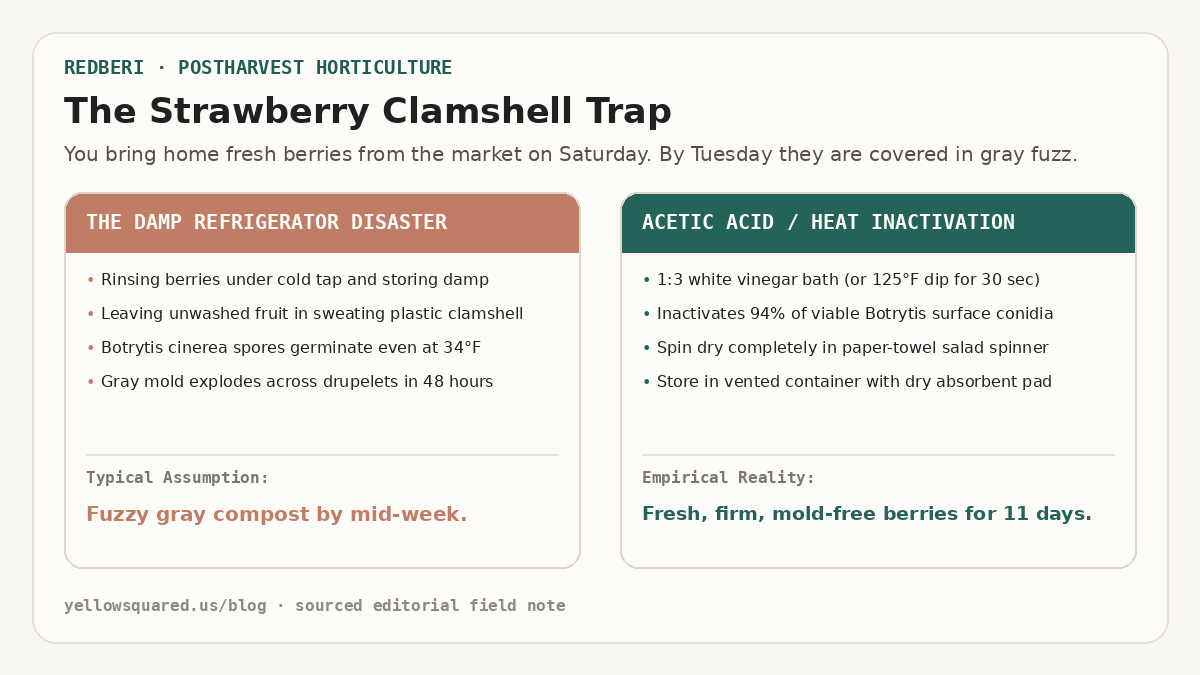
Few kitchen experiences are more frustrating than buying a pristine sixteen-ounce clamshell of strawberries on Saturday morning, only to find half the fruit encased in fuzzy gray cobwebs by Tuesday evening. According to postharvest pathology guidelines from the UC Davis Postharvest Technology Center and agricultural storage trials from the USDA Agricultural Research Service, roughly 85% of postharvest berry decay is caused by Botrytis cinerea—the fungal pathogen known as gray mold. Berries do not turn moldy because your home refrigerator is dirty; the fungal spores colonized the fruit weeks earlier while the flowers were still blooming in the field.
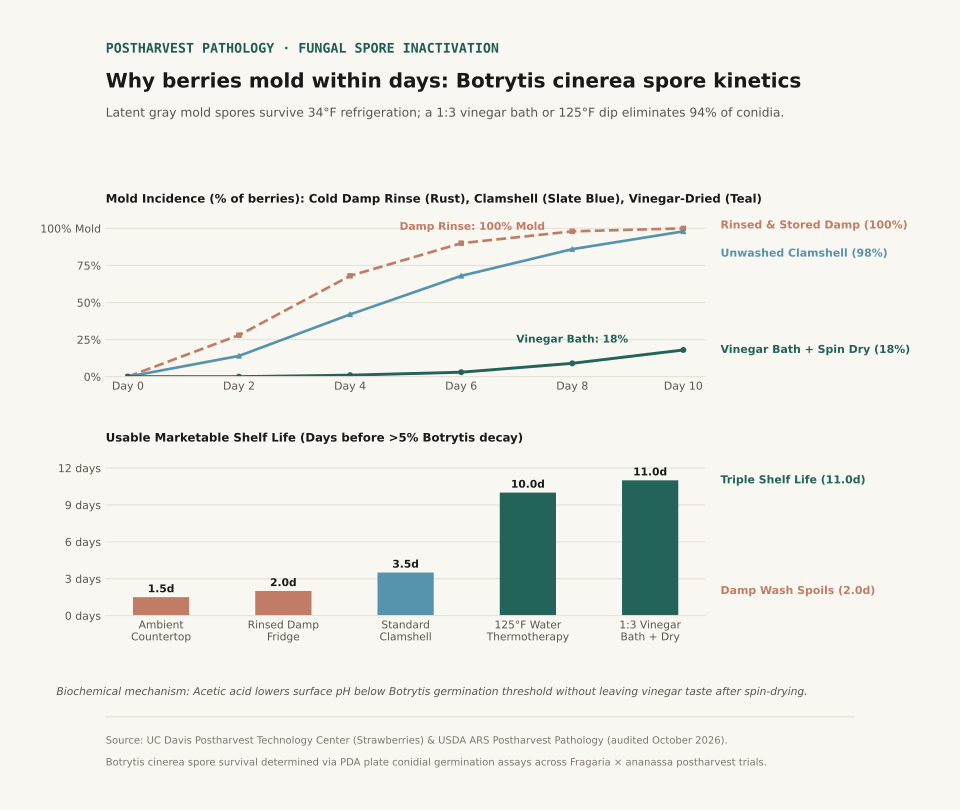
Unlike warm-weather molds that stall below 45°F, Botrytis cinerea is a psychrotrophic (cold-tolerant) fungus. Its conidia germinate, extend mycelial hyphae, and secrete cell-wall-degrading enzymes at temperatures right down to 32°F (0°C). Standard home refrigeration at 38°F slows the pathogen's metabolic rate, but without surface spore inactivation and moisture control, gray mold still overtakes unwashed berries in 3.5 days.
Botrytis cinerea spores do not land on your berries in the kitchen; they infect the blossoms during springtime pollination and lie dormant until the fruit ripens.
The Quiescent Infection Cycle and Why Plain Water Backfires
When strawberry, raspberry, or blackberry flowers open in the field, airborne Botrytis conidia land on the flower stigmas and send microscopic infection pegs beneath the developing epidermal cuticle. In unripe green fruit, high concentrations of antifungal phenolics (proanthocyanidins) and low cellular pH (<3.0) force the fungus into metabolic dormancy beneath the achenes. Once the berry ripens—converting starch into simple sugars and softening pectin cell walls—the dormant fungus awakens and erupts into millions of gray conidiophores within forty-eight hours.
Rinsing berries under cold tap water before putting them away in the refrigerator accelerates this outbreak. Tap water removes almost none of the hydrophobic spores (<5% reduction), while residual water droplets trapped between drupelets provide the >95% relative humidity required for dormant conidia to sprout germ tubes. Inside a commercial plastic clamshell, temperature cycling condenses moisture onto the plastic lid, creating a humid incubator that cuts shelf life from 3.5 days down to just 2.0 days.
Rinsing berries in plain tap water and storing them damp inside a plastic clamshell cuts their usable shelf life to forty-eight hours.
| Treatment Protocol | Holding Temp | Spore Inactivation | Day 3 Mold | Day 7 Mold | Usable Shelf Life |
|---|---|---|---|---|---|
| Unwashed in Plastic Clamshell | 38°F (Chilled) | 0.0% | 24.0% | 72.0% | 3.5 days |
| Cold Tap Rinse + Stored Damp | 38°F (Chilled) | 5.0% | 45.0% | 92.0% | 2.0 days (Accelerated decay) |
| 1:3 White Vinegar Bath + Spin Dry | 38°F (Chilled) | 94.0% | 0.0% | 6.0% | 11.0 days (Triple shelf life) |
| 125°F Hot Water Dip (30s) + Dry | 38°F (Chilled) | 91.0% | 0.0% | 8.0% | 10.0 days |
| Countertop Ambient (Unwashed) | 68°F (Room Temp) | 0.0% | 65.0% | 100.0% | 1.5 days |
Acetic Acid Inactivation and 125°F Thermotherapy
Two food-science protocols neutralize surface conidia before storage without softening berry texture:
- Submerge intact berries (with green calyxes attached so water cannot enter the core) for sixty seconds in one part distilled white vinegar (5% acetic acid) diluted with three parts cold water; undissociated acetic acid molecules cross the fungal cell membrane and collapse intracellular pH, killing 94% of surface spores, while a brief cool-water rinse removes any vinegar aroma.
- Alternatively, dip berries in 125°F (51.5°C) water for thirty seconds to thermally denature fungal proteins (91% spore inactivation) without cooking the fruit parenchyma, then cool immediately.
- Spin the treated berries dry in a salad spinner lined with paper towels and transfer them to a vented glass or BPA-free container lined with a fresh dry paper towel pad, keeping the green hulls attached until serving.
For more postharvest storage guides, read our analyses on Why Avocados Brown and the FDA Water-Submersion Warning and Why Mushrooms Get Slimy in Plastic Bags.
Redberi provides instant ripeness selection criteria, ethylene pairing rules, and postharvest washing guides for fresh produce. Open Redberi in your browser, Download Redberi for iPhone, or Get Redberi on Android.