
Why Supermarket Mushrooms Turn Slimy in Plastic but Keep in Paper
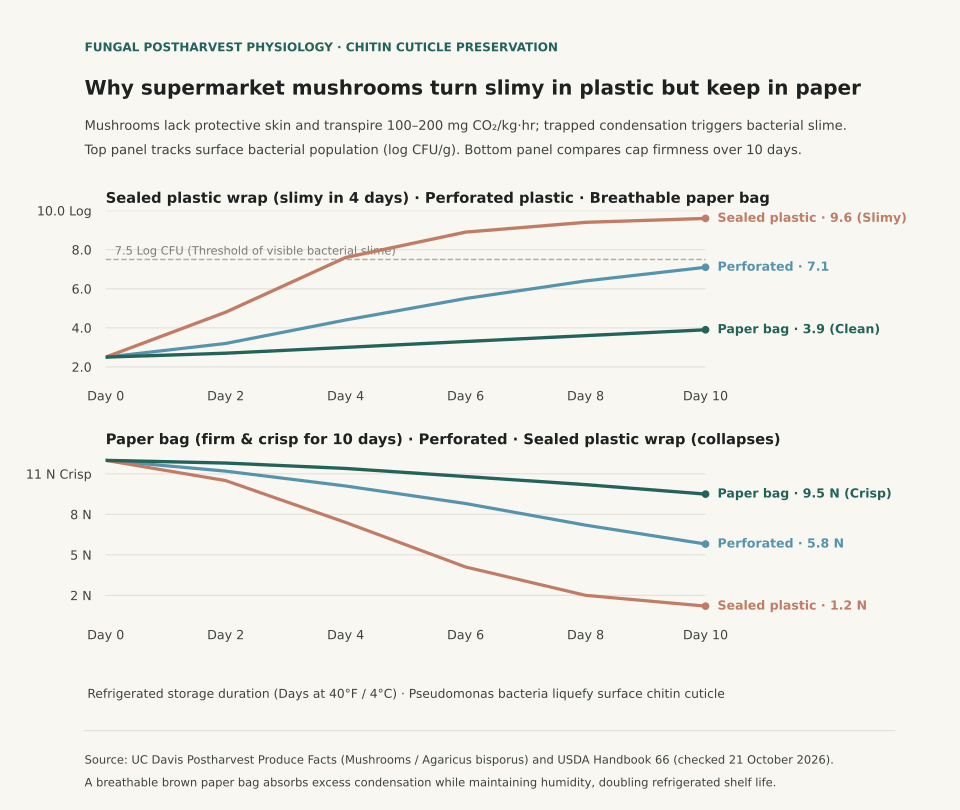
Grocery store mushrooms become slimy and turn dark brown when sealed in plastic wrap because mushrooms are living fungi that respire at exceptionally high rates, trapping transpired water vapor against their cell walls to create an anaerobic breeding ground for surface bacteria. According to postharvest physiology research from the University of California Davis Postharvest Technology Center and postharvest standards in USDA Agricultural Handbook 66, harvested button, cremini, and portobello mushrooms (Agaricus bisporus) lack a protective waxy cuticle and respire at 100 to 200 milligrams of carbon dioxide per kilogram per hour under refrigeration. In a sealed plastic container, liquid condensation pools on the fungal surface within 48 to 72 hours, allowing native Pseudomonas fluorescens bacteria to multiply past the critical threshold of 7.5 log CFU per gram, where bacterial enzymes dissolve exterior chitin and generate sticky brown slime.
Shoppers often assume that mushrooms spoil in the refrigerator due to thermal decay and try to preserve them by sealing them tighter in airtight food containers or plastic produce bags. Unlike true vegetables, mushrooms are fungi whose cell walls are reinforced with chitin—the same resilient polysaccharide found in crab and insect shells—rather than plant cellulose and pectin. Chitin does not dissolve in water or collapse easily under heat, which is why mushrooms retain their structure when cooked. The vulnerability of mushrooms lies in surface moisture: transferring mushrooms from commercial plastic trays into a simple, breathable brown paper bag allows excess moisture to evaporate safely while maintaining adequate humidity, extending crisp shelf life from three days to ten days.
The Biology of Sliming: Respiration, Condensation, and Pseudomonas
Unlike leafy greens or root vegetables, commercial mushrooms have no roots, vascular xylem, or protective stomatal cuticles. The entire fungal fruiting body consists of compressed hyphal filaments exposed directly to the surrounding atmosphere. Harvested mushrooms have one of the highest respiration rates in the entire produce aisle, consuming oxygen and releasing large volumes of water vapor as metabolic byproducts.
When packaged in commercial plastic-wrapped foam trays, moisture cannot escape. As refrigerator compressor cycles warm and cool the container by two to three degrees, water vapor condenses against the plastic film and drips onto the mushroom caps. Native psychrotrophic bacteria—principally Pseudomonas tolaasii and Pseudomonas fluorescens—thrive in standing moisture films at 4°C. These bacteria secrete extracellular proteases and lipases that digest the outer fungal hyphae, creating the distinctive slick, foul-smelling slime that ruins pre-packaged mushrooms. The table below compares commercial storage materials across moisture, bacterial growth, and culinary shelf life:
| Packaging Method | Surface Moisture Behavior | Day 4 Quality Status | Day 10 Quality Status | Bacterial Count (Day 10) | Usable Refrigerated Lifespan |
|---|---|---|---|---|---|
| Sealed Plastic Wrap (Store Tray) | Heavy pooling condensation | Yellow-brown spots; sticky film | Liquefied cap; pungent rot | 9.6 log CFU/g (Spoiled) | 3 to 4 days |
| Perforated Plastic Bag | Moderate condensation droplets | Dry cap; slight gill darkening | Shrunken; rubbery fibrous stem | 7.1 log CFU/g (Borderline) | 5 to 6 days |
| Breathable Brown Paper Bag | Moisture absorbed and vented | Pristine white cap; dry surface | Slight desiccation; crisp interior | 3.9 log CFU/g (Fresh) | 8 to 12 days |
| Airtight Plastic Container | Severe anaerobic moisture pool | Rapid decomposition | Complete structural collapse | 9.8 log CFU/g (Spoiled) | 2 to 3 days |
The Paper Bag Protocol for Refrigerator Storage
To keep mushrooms crisp and firm for over a week at home, follow three simple storage steps upon returning from the supermarket:
First, immediately remove and discard the commercial plastic stretch film. If the mushrooms are sold in a plastic punnet or foam tray, take them out of the container completely.
Second, place the unwashed mushrooms into a standard brown paper lunch bag. Fold the top of the bag over once or twice to prevent loose debris from entering while leaving the seam unsealed. The porous cellulose fibers of the paper act as a moisture buffer: they absorb excess humidity when condensation forms and release moisture back to the air without allowing liquid droplets to pool on the mushroom caps.
Third, store the paper bag on a middle refrigerator shelf rather than inside a sealed high-humidity vegetable crisper drawer. Never wash or rinse mushrooms until seconds before cooking: rinsing introduces water into the porous hyphal network that cannot evaporate in cold air, diluting flavor and accelerating browning during sautéing. For related food biochemistry and produce storage rules, read Why Sliced Apples Turn Brown and How Chloride Ions Stop Oxidation and explore Sprouted Garlic Chemistry: Higher Antioxidants Alongside a Bitter Green Germ.
Redberi (In Season) catalogs produce respiration rates, proper refrigerator storage zones, and seasonal harvest calendars for hundreds of culinary fruits, vegetables, and fungi. Open Redberi in your browser, Download Redberi for iPhone, or Get Redberi on Android.