
Why Storing Onions and Potatoes Together Spoils Both: Ethylene, Solanine, and Moisture Exchange
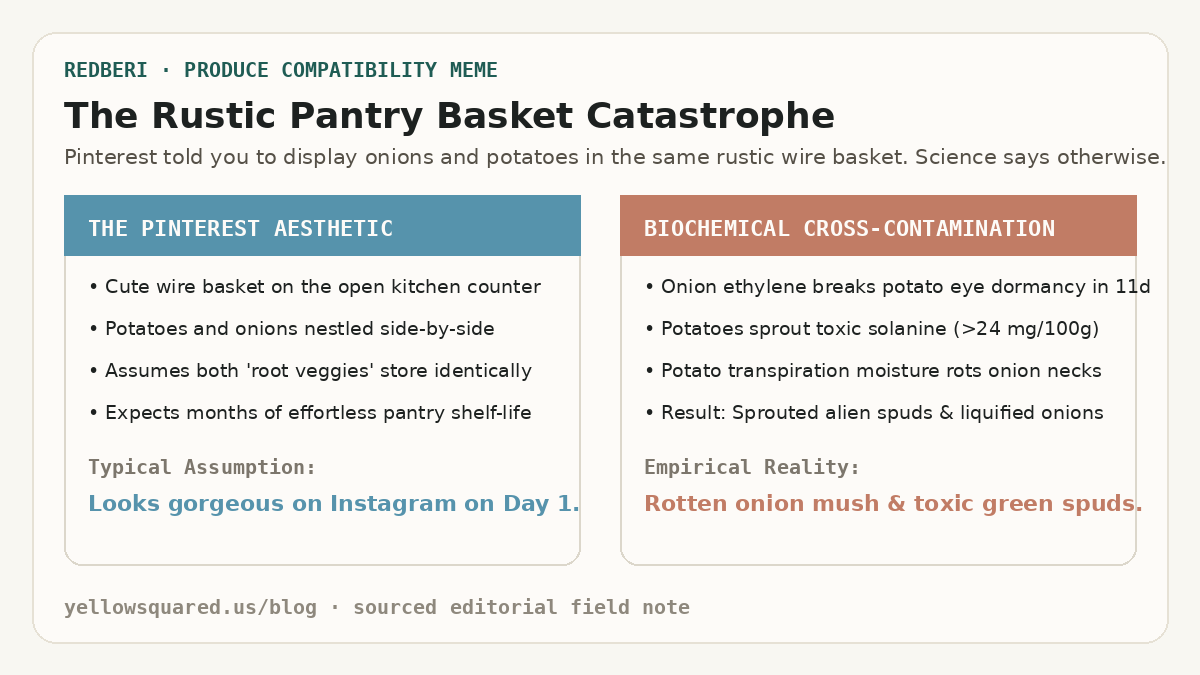
Storing raw onions and potatoes together in the same countertop basket or pantry bin is a ubiquitous household practice popularized by home decor imagery, yet postharvest biologists consider it one of the most destructive produce storage mistakes. According to postharvest agricultural research from the UC Davis Postharvest Technology Center and the USDA Agricultural Research Service (Handbook 66), onions (Allium cepa) and potatoes (Solanum tuberosum) possess incompatible physiological requirements and engage in destructive biochemical cross-talk. When stored in close proximity, onions continuously emit low levels of ethylene gas that break tuber eye dormancy, triggering rapid potato sprouting and toxic glycoalkaloid (solanine) accumulation. In return, potatoes transpire high volumes of water vapor, elevating local humidity and inducing bacterial neck rot and fungal mold in cured onion skins.
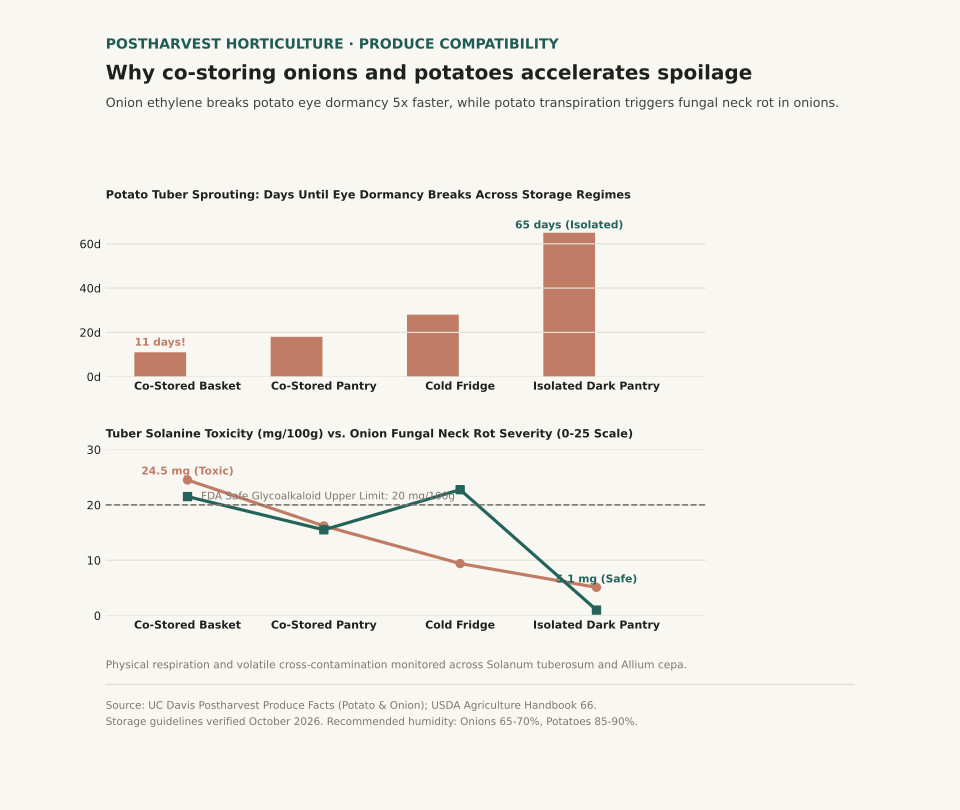
The speed at which co-storage accelerates deterioration is dramatic. When isolated in a cool, dark, well-ventilated cellar at 50°F (10°C), commercial potatoes maintain eye dormancy for sixty to ninety days. Place those same potatoes in a basket beside cured yellow onions, and eye buds swell and sprout vigorous green shoots in fewer than twelve days. Simultaneously, the moisture released by potato respiration softens the onion's protective papery outer scales, allowing pathogens like Botrytis aclada to colonize the neck tissue, turning firm onions into pungent, liquified mush within two weeks.
Co-storing onions and potatoes cuts their combined pantry shelf life by more than eighty percent, creating a mutual feedback loop of sprouting and rot.
Biochemical Mechanisms: Ethylene Signaling and Glycoalkaloid Synthesis
The physiological driver of potato spoilage in the presence of onions is ethylene sensitivity. Although mature cured onions are categorized as low ethylene producers compared to climacteric fruits like apples or bananas, they continuously synthesize baseline amounts of ethylene (0.1 to 0.5 µL/kg·hr). Potato tubers, while dormant, are acutely sensitive to intermittent ethylene exposure. Ethylene acts as a biochemical alarm clock, upregulating gibberellin synthesis and amylase activity that hydrolyzes tuber starch reserves into simple sugars to fuel shoot emergence.
As the potato's eyes sprout, the tuber initiates the synthesis of chlorophyll and toxic steroidal glycoalkaloids—primarily α-solanine and α-chaconine. While harmless at baseline concentrations (under 5 mg per 100g fresh weight), solanine levels in sprouted, greening potatoes quickly exceed the 20 mg/100g safety threshold established by the U.S. Food and Drug Administration (FDA). Ingestion of elevated solanine causes gastrointestinal distress, burning in the throat, headache, and neurological symptoms. Furthermore, solanine is heat-stable: boiling, baking, or frying sprouted potatoes fails to degrade the toxin.
Sprouted green potatoes accumulate solanine exceeding twenty milligrams per hundred grams—a heat-stable toxin that cannot be destroyed by cooking or baking.
| Produce Crop | Optimal Storage Temp | Optimal Humidity (RH) | Ethylene Profile | Primary Spoilage Threat | Recommended Household Location |
|---|---|---|---|---|---|
| Cured Dry Onions (Allium cepa) | 45°F–55°F (7°C–13°C) | 65%–70% (Dry air essential) | Low producer (0.1–0.5 µL/kg·hr) | Neck rot (Botrytis); moisture softening | Hanging mesh bag in cool, dry, airy pantry |
| Ware Potatoes (Solanum tuberosum) | 45°F–50°F (7°C–10°C) | 85%–90% (Moist air prevents shrivel) | Ethylene sensitive; low producer | Sprouting; solanine accumulation; light greening | Dark bin, perforated paper bag; away from all fruits |
| Co-Stored Together (Same Bin) | Room Temp (68°F–72°F) | 75%–80% (Incompatible microclimate) | Ethylene triggers potato eyes | Simultaneous sprouting and bacterial rot | Prohibited: Accelerates loss within 10–14 days |
| Refrigerated Storage (38°F) | 36°F–40°F (2°C–4°C) | 85%–95% (High humidity) | Suppressed respiration | Cold sweetening in potatoes; slime in onions | Prohibited for raw whole tubers and dry onions |
Practical Pantry Management: Segregating Roots and Alliums
To maximize the usable lifespan of both crops without chemical sprout inhibitors, keep them physically separated in environments tailored to their distinct respiratory profiles:
- Store potatoes in complete darkness with high humidity: Place potatoes in a breathable cardboard box, wooden crate, or brown paper bag in the coolest, darkest corner of your kitchen or pantry (ideally 45°F–50°F). Darkness stops chlorophyll synthesis and solanine production, while breathable containment preserves 85% relative humidity to prevent dehydration. Never refrigerate raw potatoes: cold below 42°F triggers 'cold-induced sweetening', converting starch into reducing sugars that produce carcinogenic acrylamide when fried or roasted.
- Keep onions dry and exposed to circulating air: Store dry bulb onions in an open mesh bag, wire basket, or slatted wooden crate in a dry, well-ventilated spot with low humidity (65%–70%). Dry air keeps the protective outer papery tunic intact, locking out fungal spores.
- Maintain a physical separation of at least several feet: Never store onions, garlic, or shallots in the same enclosed drawer or cupboard with potatoes or sweet potatoes. Physical segregation breaks the ethylene feedback loop, allowing both staples to remain firm, dormant, and delicious for three to four months.
To master produce shelf-life and biochemical storage interactions, explore our related guides on Why Bananas Turn Black in the Refrigerator and Ethylene-Producing vs. Sensitive Produce Management.
Redberi tracks storage compatibility matrices, ethylene sensitivities, and shelf-life extension guidelines for over ninety fresh culinary crops. Open Redberi in your browser, Download Redberi for iPhone, or Get Redberi on Android.