A ripe mango smells fruity near the stem and gives slightly when you press it gently. Do not judge it by red or yellow skin alone: mango colour varies widely by variety. Choose firm fruit for later, or fruit with a little give for eating today.
Check
Promising sign
Pass on it when
Feel
Full and slightly yielding, like a ripe avocado
Deeply soft, collapsed or damaged; firm sound fruit can suit later use
Aroma
Sweet, fruity scent near the stem
Sour, alcoholic or fermented smell
Skin
Sound skin without leaks or large bruises
Wet spots, mould, cracks or shrivelling
Colour is variety-specific
A red mango can be under-ripe; a green mango can be mature. Many common varieties develop some yellow as they ripen, but colour is not consistent enough to decide on its own. A gentle feel and aroma test travel better across varieties than a colour rule.
Ripen mangoes at room temperature
Mangoes are climacteric fruit, so they can continue ripening after harvest. Leave firm mangoes on the counter and check them daily. A loose paper bag with a banana can speed the process. Once ripe, move them to the refrigerator if you need a short holding window.
Do not confuse softness with quality
A mango should yield a little, not feel like it has a hollow pocket or a bruised side. Press with your palm rather than a fingertip to avoid damaging fruit. If the mango smells fermented or has leaking skin, it is overripe rather than extra sweet.
A firm mango can be the right purchase
The question is when you want to eat it. Slight give and aroma are useful for a near-term snack. Firm, undamaged fruit can suit a later meal if it was mature at harvest. Deep softness, leakage or fermentation belong in a different category: fruit to pass on.
Plan the purchase
Buy one that is ready now and one that is firm if you want mangoes across several days. This simple stagger avoids the familiar moment when every mango reaches its narrow good window at once.
Choose a watermelon with a creamy yellow field spot, an undamaged rind and a shape typical for its variety. Watermelon does not ripen significantly after harvest, so do not expect a pale or under-ripe melon to improve on the counter.
Check
Useful clue
What it cannot promise
Field spot
Creamy yellow to yellow patch where the melon rested on the ground
Exact sweetness inside
Rind
Sound, mature-looking skin with no deep cuts, soft spots or decay
That every variety will have the same shine
Shape
Even shape appropriate to the variety
That a round melon is always better than an oblong one
Tap
A dull, hollow sound can support the other clues
A reliable standalone ripeness test
Start with the field spot
The field spot is the patch that touched the ground while the melon grew. As a practical shopping clue, creamy yellow is more promising than stark white or pale green. It is one sign among several, not a substitute for knowing the grower or season.
Check the rind before the sound
Look for an intact rind free from soft spots, cracks and decay. USDA grade standards require mature, well-formed fruit free of damage; that is a better starting point than a complicated thumping ritual. A dull, hollow sound may be useful as a supporting cue, but it changes with size, variety and how you tap.
Do watermelons ripen after they are picked?
Not significantly. Watermelon is non-climacteric, so it will not continue to increase its sweetness after harvest. Keep an uncut melon in a cool place, then refrigerate cut pieces promptly. If the one you open is sound but less sweet than hoped, use it in agua fresca or a savoury salad. Discard spoiled fruit; a recipe cannot fix decay.
Wash the rind before the knife goes through it
Scrub the intact melon under running water with a clean produce brush before cutting. Wash even when you will not eat the rind, because cutting can transfer material to the flesh. Refrigerate cut pieces promptly. The FDA's preparation guide recommends these steps for firm produce such as melons.
Buy in season when you can
In North America, local watermelon is commonly strongest in summer, though exact timing varies by region and imports keep stores stocked outside it. Good turnover matters year-round: a retailer that moves fruit quickly gives you a better chance than any visual trick.
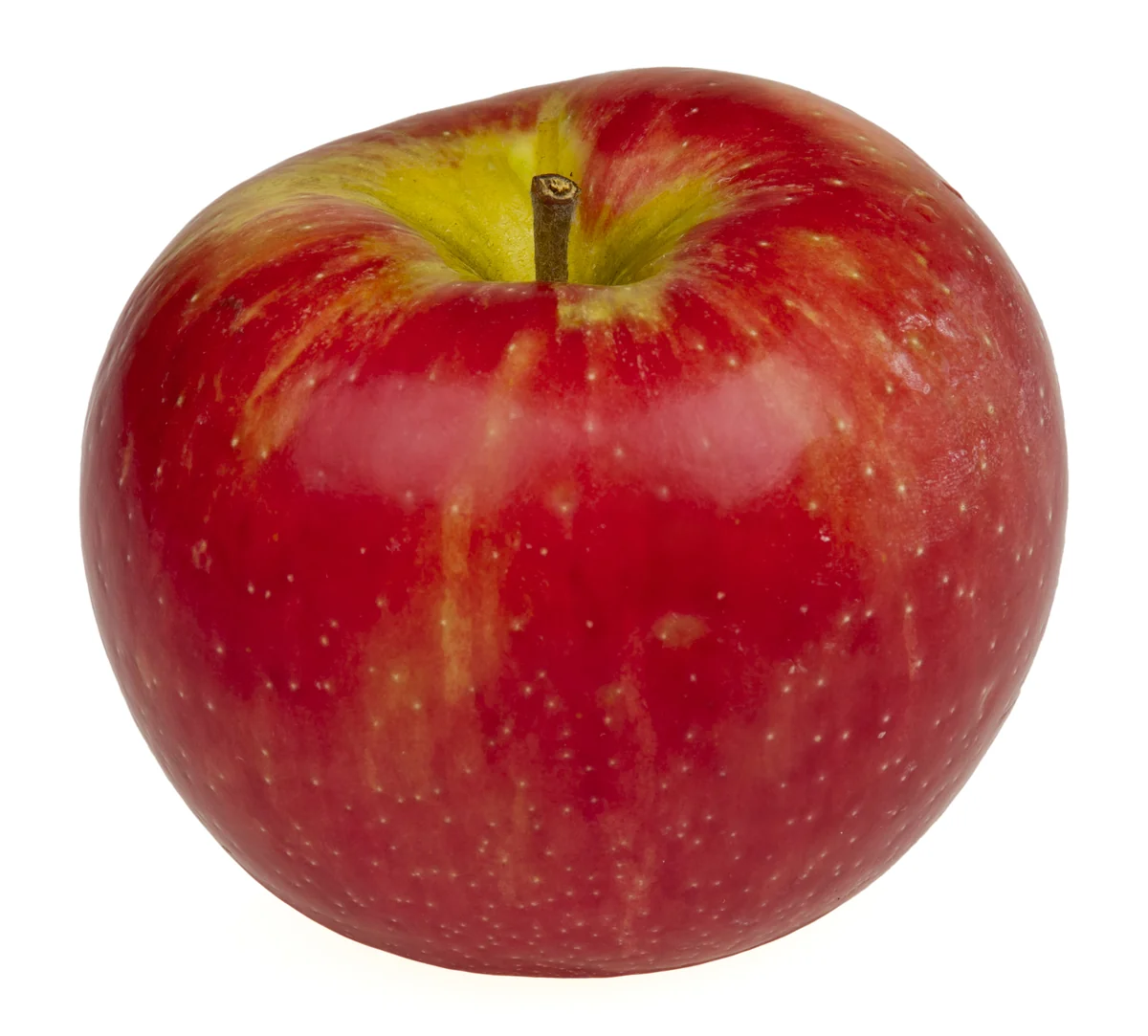
Those tiny dots on an apple are usually lenticels: natural openings in the skin. They can be useful for recognizing a variety, but they do not reliably tell you how sweet an individual apple will taste. For a better grocery-store decision, start with the variety, firm unbroken skin, the fruit's aroma where relevant, and a few fruit-specific maturity signs.
Lenticels are small, natural openings in an apple's skin. (Photo: Evan-Amos, CC0 via Wikimedia Commons)
What lenticels can - and cannot - tell you
Lenticels allow gas exchange through the skin. Their appearance varies by cultivar, growing conditions and handling. University of Maryland Extension describes lenticels as lens-shaped openings and notes that changes around them can also be a storage disorder. That makes them a poor shortcut for ranking sweetness in a produce bin.
Fruit
Useful signs to check
Do not treat this as a sweetness guarantee
Apples
Choose the variety you enjoy; look for firm skin without bruises or shrivelling.
More or darker lenticels.
Peaches
Warm cream or yellow background colour, fragrance and slight give for fruit to eat soon.
Red blush alone.
Cantaloupe
Sweet aroma, raised netting and a clean stem scar.
Netting by itself, or a melon that merely feels heavy.
Watermelon
A creamy yellow field spot, sound rind and a shape typical for the variety.
Thumping, webbing or field spot colour alone.
Two dotted apples can taste different
A tart apple and a sweet-tasting apple can both have visible lenticels. The surface openings tell you something about the skin; they do not reveal the balance of sugar and acid inside. Start with a variety whose flavour you enjoy, then use condition to choose among its fruit.
A practical way to choose an apple
First, pick the variety for the job. A tart Granny Smith, fragrant Gala and crisp Honeycrisp are different on purpose; no surface pattern makes them interchangeable. Then reject apples with soft bruises, wrinkled skin or punctures. Firmness is a useful freshness check, although it cannot reveal every internal defect.
At home, keep apples cold. Apples are climacteric fruit: they continue to produce ethylene after harvest, which is useful for ripening some nearby fruit and unhelpful for delicate produce you want to keep longer.
Use the right clue for each fruit
Peaches
Read the background colour rather than the red blush. A peach with a green cast may soften on the counter, but the quality ceiling was set before harvest. For a fruit you want today, choose one that smells fragrant and gives gently when supported in your palm. Our peach ripeness guide has the full checklist.
Cantaloupe
Cantaloupe can soften and become more aromatic after harvest, but its sugar does not keep accumulating once it is off the vine. Look for a warm background beneath the netting, a sweet smell at the stem end and no wet or fermented spots. See the cantaloupe guide for the signs in order.
Watermelon
Watermelon does not ripen significantly after harvest, so selection matters more than counter time. A yellow or cream field spot and a mature-looking, undamaged rind are useful cues, but none can promise the inside. The best test is buying in season from a seller with good turnover. The watermelon guide explains the cues and their limits.
What actually measures sweetness?
Growers can estimate soluble solids with a refractometer, usually reported as degrees Brix. In fruit juice, that reading includes sugars and other dissolved substances; it is not a direct score for how pleasant a fruit will taste. Acidity, aroma and texture also affect the experience. You cannot get that reading from lenticels, webbing or a single tap on the rind. Visual signs are screening tools: use several together, and accept that fruit biology leaves room for variation.
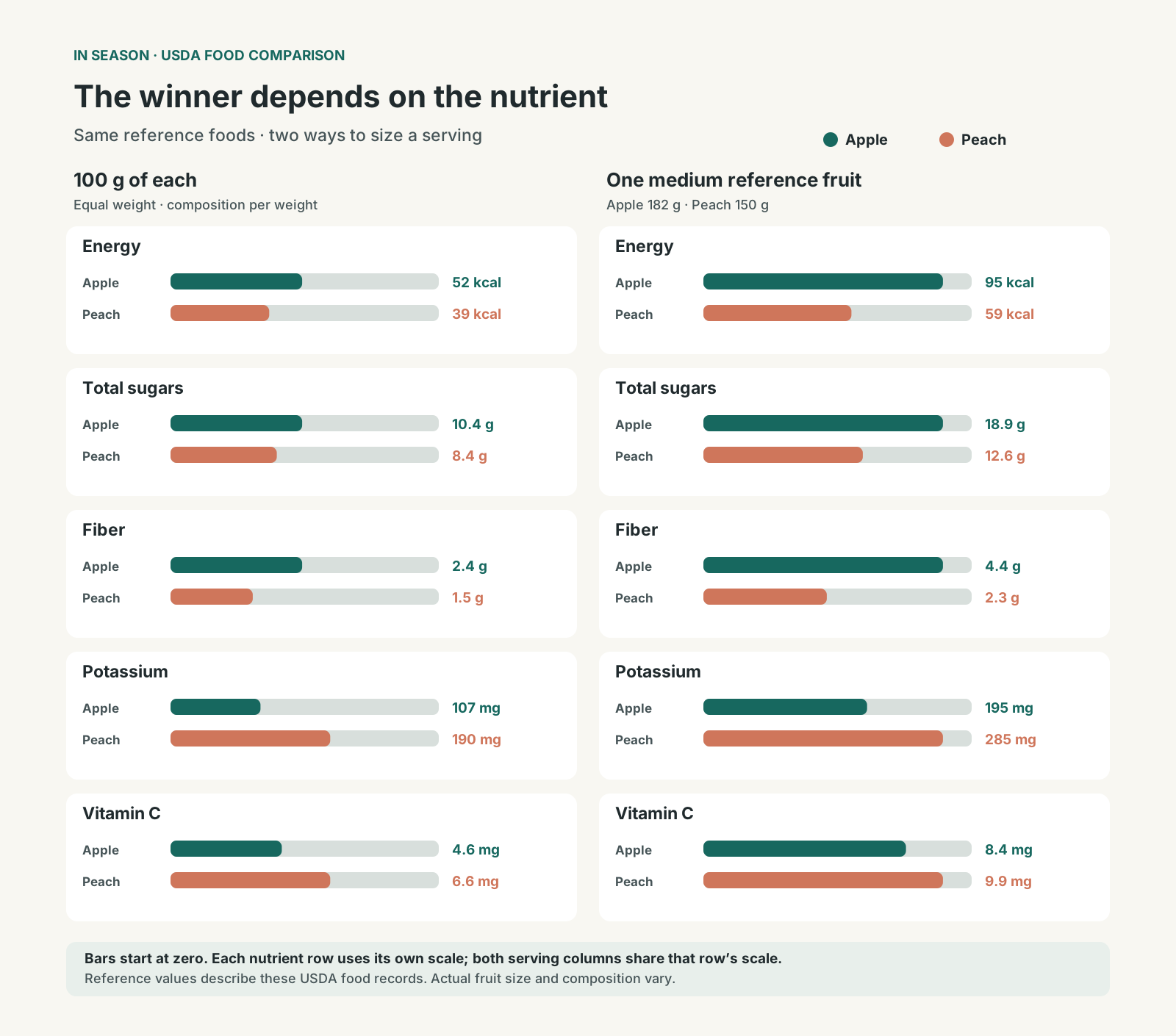
For the same 100 grams, a raw apple with skin has more calories, sugar and fiber than a raw yellow peach. A reference medium apple also has more of each, partly because it weighs more: 182 grams versus 150 grams. The peach has more potassium and vitamin C in both comparisons. So which fruit comes out ahead depends on the nutrient and the portion you mean.
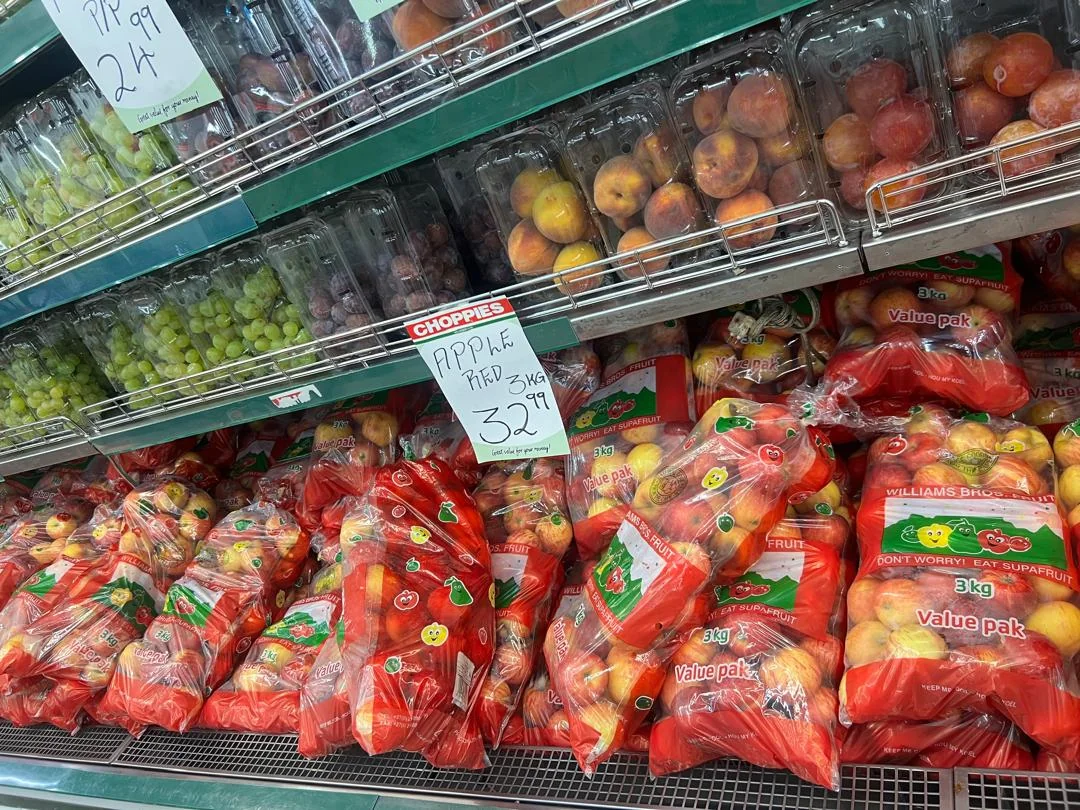
Apples and peaches in a supermarket produce display. Photo by Olgatladi2020, shared under CC BY-SA 4.0 via Wikimedia Commons.
“Apple vs. peach” sounds like one question, but it can mean two different comparisons. Equal weights show how the foods compare gram for gram. A whole-fruit serving shows what you get from one reference-sized fruit. Those answers can feel different because a medium apple in the selected USDA record is 32 grams heavier than a medium yellow peach.
The same USDA food records shown two ways: equal 100 g portions and one reference medium fruit. Each nutrient row has its own scale, shared across the two serving comparisons. Reference foods and portions are estimates; real fruit varies.
Apple vs. peach nutrition at a glance
The values below use two specific USDA FoodData Central SR Legacy records: raw apple with skin (FDC 171688) and raw yellow peach (FDC 169928). The medium-fruit columns use the records’ reference weights. Numbers are rounded for readability.
Nutrient
Apple, per 100 g
Yellow peach, per 100 g
Medium apple, 182 g
Medium yellow peach, 150 g
Energy
52 kcal
39 kcal
95 kcal
59 kcal
Carbohydrate
13.81 g
9.54 g
25.1 g
14.3 g
Total sugars
10.39 g
8.39 g
18.9 g
12.6 g
Fiber
2.4 g
1.5 g
4.4 g
2.3 g
Potassium
107 mg
190 mg
195 mg
285 mg
Vitamin C
4.6 mg
6.6 mg
8.4 mg
9.9 mg
Why equal weight and whole fruit give different answers
At 100 g apiece, the apple record has 52 calories and the yellow-peach record has 39. That is the cleaner comparison if you want to compare the foods at the same weight. But many people pick up a fruit, not a pre-weighed 100 g portion.
For the reference medium fruits, the apple’s 182 g portion works out to about 95 calories; the peach’s 150 g portion works out to about 59. That is a comparison of two reference portions with different weights. A small apple and a large peach can narrow the whole-fruit gap. If portion size matters to your choice, weigh the fruit you plan to eat or use its actual size as a rough guide.
Which has more fiber?
The apple has more fiber in this comparison: 2.4 g per 100 g, against 1.5 g for yellow peach. The reference medium apple comes to about 4.4 g, while the reference peach comes to about 2.3 g. The apple entry is specifically for raw fruit with skin, so peeling it changes what you eat compared with this record.
That makes apple the higher-fiber pick among these two records and portions. It does not tell you exactly how filling either fruit will feel; appetite, the rest of the snack and personal preference all play a part.
Which has less sugar and fewer calories?
Yellow peach is lower in both total sugars and energy here. Per 100 g, the records list 8.39 g of total sugars and 39 calories for peach, versus 10.39 g and 52 calories for apple. The reference whole-fruit estimates are 12.6 g and 59 calories for peach, versus 18.9 g and 95 calories for apple.
These are total-sugar values for whole-fruit reference foods. They let you compare the selected portions; they do not measure added sugar.
Potassium and vitamin C favor the peach record
For potassium and vitamin C, the comparison goes the other way. Per 100 g, the yellow-peach record lists 190 mg of potassium and 6.6 mg of vitamin C; the apple record lists 107 mg and 4.6 mg. The reference medium peach also comes out higher for both: about 285 mg of potassium and 9.9 mg of vitamin C, compared with about 195 mg and 8.4 mg for the apple.
So, should you pick an apple or a peach?
Use the comparison that matches your question. Looking at equal weights? In these USDA records, peach is lower in calories and total sugars, while apple has more fiber. Choosing one medium fruit? The apple reference weighs more, so it has larger totals for calories, sugar and fiber; the peach remains higher for potassium and vitamin C.
Then let taste, texture, ripeness and what is in season make the everyday decision. An apple may suit you when you want a crisp fruit; a ripe peach may suit you when you want something soft and juicy. You can enjoy either fruit, or both.
Nutrition values come from USDA FoodData Central SR Legacy records for apples, raw, with skin (FDC 171688) and peaches, yellow, raw (FDC 169928), checked through the public USDA API. SR Legacy is USDA’s final Standard Reference release; see the FoodData Central dataset downloads. Whole-fruit values are calculated by scaling the per-100 g values to the reference portions (182 g and 150 g). Download the chart calculation data (CSV) and selected USDA reference records (JSON). The medium-fruit estimates round calories and potassium to whole units and other values to one decimal; half units round up, so 58.5 calories appears as 59. Actual fruit size and variety affect the totals in a portion, and composition varies. These entries do not represent every apple or peach variety, peeled fruit, or cooked and canned fruit.